Friday, February 26, 2010

Doc notes lesson 2 part 4 The Fall Mankind through Adam and Eve


Gentle Reader,


I have found that this study brings more to the surface than I had expected for example: Original sin for example was term used by Saint Augustine (354-430) was the first theologian to teach that man is born into this world in a state of sin. The basis of his belief is from the Bible (Genesis 3:17-19) where Adam is described as having disobeyed God by eating the forbidden fruit of the tree of knowledge in the Garden of Eden.


 This, the first sin of man, became known as original sin.


My understanding of original sin certainly was coloured by my childhood where I was raised in a Roman Catholic home by good Irish Catholics. And it has only been recently that I have looked once again at this concept. For many years as a pastor when teaching through the book of Romans, I would make a distinction between SIN and sins SIN being "a hereditary corruption" from Adam and sins then being "accumulated transgressions".


Note: There is a vital distinction in the New Testament between the word SINS and the word SIN (when used generically). SINS are to be distinguished from SIN as the fruits of an evil are to be distinguished from their root, and as symptoms are to be distinguished from the disease. SINS are committed offenses: SIN is the defect which we inherit from Adam by natural generation, SINS must be forgiven for we are morally accountable for them. SIN, the disease, is not forgiven but covered (in the Old Testament), and cleansed, or taken away, or put away (in the New Testament). SINS are the cause of our spiritual death: SIN is the cause of our physical death.


On the Day of Atonement, two goats not one were sacrificed. One was "sent away" into the wilderness, there to perish in isolation, the sins of God's people having been laid upon its head. This goat represented the break in fellowship between the Son and the Father during the three hours of darkness. The other goat was slain and its blood sprinkled on the altar in the Holy of Holies. The first sacrifice was an offering for SINS; the second was a SIN-offering.


These two requirements, an offering for SINS and an offering for SIN, were both fulfilled by the Lord Jesus Christ on the day He made an atonement. Since these sacrificial animals which prefigured Him as Saviour and Redeemer had to be perfect, so He also had to be perfect both in spirit and in body.


In the Old Testament ritual on the Day of Atonement, the two goats were brought before the judges in the Temple. They were, first of all, declared satisfactory and then both were "slain," one by banishment, the other by being slaughtered. Two goats were required because a single animal could not physically be both ritually slain and banished.


But the Lord Jesus Christ fulfilled both roles. His innocence having been established, He was then in a position to be appointed to both kinds of dying ? under circumstances which were altogether exceptional. Moreover, the manner of his dying (by crucifixion) was not at all customary in Jewish law. Yet the mode of his execution was necessary in order to provide a stage which would allow both kinds of dying to be fulfilled.


But this is not the final act. The Lamb of God has been sacrificed. In this sacrifice He was both victim and High Priest. He offered Himself. It was then necessary that He, as High Priest, present the blood of his own sacrifice before the very presence of God in the Holy of Holies which is in heaven. For this, his bodily resurrection was essential.
He then returned in Person, bodily, to present Himself before his people, as the High Priest under the old Covenant presented himself again before his people the signal that his atoning sacrifice had been accepted before God. Any other form of resurrection than a bodily one would have placed in doubt the efficacy of his role as our sacrificial victim and his role as our great High Priest.


We may think of the Lord's work in salvation as a purely spiritual exercise. Yet so much that He accomplished depended upon the possession of a body. It was through his body that He lived out a perfect human life and thus qualified as our sacrificial victim. It was through his body that He was able to die. And it was in his resurrection body, a body which was not allowed to see corruption, that He returned to proclaim God's acceptance of the sacrifice He had made.


 Returning to our study of Genesis,


Based upon Romans Chapter 5 where we read from the pen of Paul the apostle "Wherefore, as by one man[Adam]sin entered into the world, and death by sin; and so death passed upon all men, for that all have sinned:"(For until the law sin was in the world: but sin is not imputed when there is no law. Nevertheless death reigned from Adam to Moses, even over them that had not sinned after the similitude of Adam's transgression, who is the figure of him that was to come. But not as the offence, so also is the free gift. For if through the offence of one many be dead, much more the grace of God, and the gift by grace, which is by one man, Jesus Christ, hath abounded unto many. And not as it was by one that sinned, so is the gift: for the judgment was by one to condemnation, but the free gift is of many offences unto justification. For if by one man's offence death reigned by one; much more they which receive abundance of grace and of the gift of righteousness shall reign in life by one, Jesus Christ.) Therefore as by the offence of one judgment came upon all men to condemnation; even so by the righteousness of one the free gift came upon all men unto justification of life. For as by one man's disobedience many were made sinners, so by the obedience of one shall many be made righteous. (Rom 5:12-19)


The "wherefore" refers to the reconciliation (atonement) of Christ spoken of in Rom 5:11. Christ's work of atonement and the effect of Adam's sins are contrasted.


Some say that it was Turtellian who first coined the phrase "original sin" but in any case it was well established by the time of Christ and Paul that something momentous had taken place that had removed man from intimate fellowship with his Creator. That which we refer to as sin, with all its attendant sufferings exists throughout our world, (perhaps we could call it evil, but sin is just as good a name) How did it get in?


 The Scriptural explanation is given to us in Chapter 3 of Genesis. It would do no good to try and vindicate the Scripture explanation against the contrary opinions of men (although to be perfectly frank I have, along with Marti and even my brother-in-law have examined hundreds of commentaries to see what other have thought). We are touching on it expositorily, not controversially. So Gentle reader, we accept the account from Scripture and its explanation; and we note three things which make up the account.


First, we have the tempting "Now the serpent was more subtil than any beast of the field which the LORD God had made. And he said unto the woman, Yea, hath God said, Ye shall not eat of every tree of the garden? And the woman said unto the serpent, We may eat of the fruit of the trees of the garden: But of the fruit of the tree which is in the midst of the garden, God hath said, Ye shall not eat of it, neither shall ye touch it, lest ye die. And the serpent said unto the woman, Ye shall not surely die: For God doth know that in the day ye eat thereof, then your eyes shall be opened, and ye shall be as gods, knowing good and evil. And when the woman saw that the tree was good for food, and that it was pleasant to the eyes, and a tree to be desired to make one wise, she took of the fruit thereof, and did eat, and gave also unto her husband with her; and he did eat." (Gen 3:1-6) The first thing we notice is that the tempting was permitted (see Job 1). It is not easy to see how it could have been otherwise in the educating of a rational and volitional being such as man. The real tragedy is that there was a tempter. The fact that man was under a simple probation mentioned in chapter 2 " But of the tree of the knowledge of good and evil, thou shalt not eat of it: for in the day that thou eatest thereof thou shalt surely die. (Heb. Dying thou shalt die)" (Gen 2:17) meant that he was liable to temptation. But consider the tempter could only tempt. There need not have been sin. And there was no reason to yield. We note too, that the temptation was introduced to Eve in solitariness.


Note also that this is Satan’s common method. The temptation was connected with the beautiful: its real character was concealed. There was the gradual growth in the strength of the temptation. First, God’s word was merely questioned (verse 1) then it is flatly contradicted (verse 4). And then, as the tempted one continues to listen, the very motive behind God’s word is maligned (verse 5). Consider also it there were two trees in the garden (the tree of life-which would have given mankind conditional immortality).


 It was not Eve's failure but Adam's that resulted in the introduction of physical death into human experience. "By one man," not by one woman, nor even by one pair, death entered and passed by natural generation upon all men (Romans 5:12). The language of both Romans 5:12 and 1 Corinthians 15:21-22 is precise and is surely to be taken to mean exactly what it says.


Consider, then, the circumstances surrounding this fatal test of Eve and of Adam in the Garden of Eden. I believe we should accept the fact that the forbidden fruit was a real fruit, even as the Tree of Life was a real tree with leaves having therapeutic value. That both trees may also be used symbolically to teach us spiritual truths is not in question. But in this study it is the actual trees in their physical character that we are examining. By gathering all the explicit and implicit information available from the biblical account we appear to have a situation in the temptation of Eve and of Adam in that order which was far more complex than the childish stealing of a forbidden fruit as traditionally presented.


Consider the circumstances. Scripture, it seems to me, has gone out of its way to make it perfectly clear that Adam really was entirely alone in the world. First of all, it is apparent that although he was in a real sense complete in himself, God evidently considered that this kind of self-sufficiency was not a good thing. Perhaps even in a state of perfection Adam needed some fundamental human inter-dependence in order to develop his character. As a potential companion, God may have brought to him certain of the creatures which man has since domesticated and whose company he has learned to enjoy as pets. In his fallen state, man can now often find solace in the 'companionship' of a dog or a horse or even of a bird or a cat. In his unfallen state such creatures were inadequate companions. Certainly God knew this of course: but perhaps He wanted Adam to discover it for himself. To none of these creatures which came to him by divine impulse (Genesis 2:19,20) did Adam respond in such a way as to indicate their sufficiency as true companions or mates. His response was revealed by the names which he gave them. He did not assign his own name to any of them as a groom now assigns his name to his wife.


So God performed an operation isolating part of Adam and constituting that part into a new whole which, when brought to him, he at once identified as the companion he had not found among the other animals. Accordingly, he named her "Woman," which is a translation of the Hebrew word Ishah - And Ishah is the feminine form of the word Ish which means man, the name by which he himself was called. Surely he must have loved her at once, for she was literally part of himself.


Without sin, radiant in health, and beautiful as only God could make her in the full perfection and maturity of womanhood, she must have returned his love. In the truest possible sense they were verily made for each other. Each completed for the other the cup of happiness in their idyllic garden home. Without doubt, her presence became as essential to his own fulfillment as his presence was to hers. And thus, in their earthly paradise, Adam and Eve passed cloudless days (because sinless) in fellowship and open communion with God, * with neither fear nor shame, and with complete freedom to do whatever they willed and to eat whatever they desired of the fruits of the garden except one tree which was forbidden them.


And then Satan put Eve to the test. Whether Satan used a serpent as an agent by controlling its behaviour from without, or whether he indwelt a serpent (as the legion of demons indwelt the Gadarene swine, Luke 8:32,33) or whether he assumed a serpent form, we cannot tell precisely from the record. Indeed, the word rendered serpent may not even mean a serpent at all.† But one could well imagine such a creature reaching up into the forbidden tree in Eve's presence and there eating its fruit with complete confidence and manifest enjoyment and, to her amazement perhaps, with apparent impunity. Possibly the thought came to Eve that if other creatures could eat of the fruit with safety, why could not she? It is a common practice of country people in all ages to be guided in their choice of safe foods by observing what animals can safely eat. Why should the same thought not have occurred to Eve?


Yet the serpent may well have actually spoken to Eve in some language clear to her understanding, as Balaam was spoken to by his ass (Numbers 22:27-32). Or was it that Eve was really speaking to herself? Perhaps when doubts arose in her mind, the Satan-inspired creature reassured her by deliberately returning to the tree sometime later and taking the fruit a second or a third time, until in her own mind she came to doubt that there were any fatal consequences involved. And yet, her intuition persisted in warning her that she should neither eat the fruit nor even touch it. To touch was to take. In the end she was deceived as the New Testament tells us (1 Timothy 2:14) and, having plucked the fruit from the tree, she tasted it and found it to be all she had anticipated, not only beautiful to look at but good to the taste and in some unexpected way enlightening to the mind . . . as some modern drugs are.


But now a subtle change took place in her body, for she had unknowingly introduced a fatal poison. Even when she went back to Adam and invited him to share her experience, she still apparently had no real comprehension of what had happened to herself. And here we come to the crux of the story. For while Eve was, in one sense, as innocent as a child who has disobeyed but is not sure exactly in what way, Adam was not deceived at all. In a moment he realized that he was once again completely alone, but now it was an aloneness of a different kind, for he had lost his other self, his love, his sole human companion in the whole wide world. Part of him was missing.


We know that he was alone in this sense, for Eve became (so the Hebrew says ) the mother of all living (Genesis 3:20). There was no other woman who might have taken her place. She stood before him; yet she stood completely apart from him. They belonged to different kingdoms. Adam knew it at once, and in that moment he faced a trial surely more heart-rending than has ever been the lot of any man since who is called upon to surrender his dearest possession. For while many other men have made such a sacrifice for one reason or another (millions were forced to do so by the Nazis), Adam could never for all he knew expect to recover a helpmeet again. There was no other woman in the world...Nor was there any other man who, placed in similar circumstances, might have shared the burden of loss with him. For a little while he had been alone before in his undivided state as he came from the hand of his Creator but very probably without any awareness of loneliness as he now felt it in his divided self. He had to face the prospect of an aloneness made acute because of what he had experienced and what he had now lost. And for all he could see, this loss was for ever. Adam was still immortal: but for Eve a subtle change had already begun and she was, as God had said she would be, from that very day a dying creature. Here lay the gulf between them: a mortal creature could not be a proper companion to a still immortal one.


Thus God, who overrules all human history, had allowed the first man to be brought into a position of trial, the severity of which is far beyond our true comprehension. Adam was faced with a choice that was quite literally a matter of life and death for him. And it had all been brought about by the eating of the fruit of a forbidden tree.


In the Hebrew original, at verse 6, there is a small mark which indicates a pause after the words "and gave also unto her husband with her" and before the words "and he did eat." The little 'mark' in the Hebrew text at the word which is translated into English "with her," is called a Tiphkha. Every Hebrew sentence is given certain accents to guide the reader as to the appropriate emphasis, and some of these are called 'separation' marks. They are somewhat analogous to our comma, colon, and so forth. The strongest separation mark in a Hebrew sentence is called a Silluq. It marks the end of a sentence, and usually in translation also marks the end of a verse. The strongest separation mark within the sentence, and therefore standing for a pause by way of emphasis, is called a Tiphhha. It is this little mark that tells us there is to be a pause after the words "with her."


It might be thought that this was hanging too much weight on so small a thread. But I think it is necessary to bear in mind that when a literary work is characterized by extreme simplicity and brevity, as Genesis is, and when the circumstances are of tremendous significance in human history, it is important to observe all the clues that the writer has given as to his intention. Adam was about to make a choice which was to affect profoundly all subsequent generations. If he joined Eve, he was settling once for all the question of whether mankind would retain the potential immortality which God had provided for. When he followed his wife and ate the fatal fruit, he, not she (as we shall show), introduced death into human experience. Death entered by one man and passed upon all men so that every one of us now lives out his whole life under the shadow of a sentence of death. This was the consequence of Adam's decision.


There is no knowing what might have been the course of history had Eve been allowed to go out of the Garden alone, for ever separated from Adam. We know from Genesis 4:1 that Eve was not pregnant at this time since Adam did not "know" her until sometime later. Such a separation would therefore seem to bring an end to the human race in terms of further multiplication, unless we suppose that God might have allowed Adam to go with her into exile even though he had not disobeyed. Their children would still have been immortal in such a case, for the seed of the man was still uncorrupted and the seed of the woman had been protected against corruption. Though she herself would die, since she had fatally poisoned her own body, yet Adam and her children would still have retained their potential immortality for we know that the fatal poison is not transmitted through or in the woman's seed, and the seed of Adam still unfallen would in such a circumstance have retained its purity also. But it seems most unlikely that God would have permitted Adam to leave the Garden, and the hypothesis has very little validity: but it is an interesting one to contemplate.


Adam cannot perhaps have anticipated all the profound consequences of his action, but we should not underestimate the perceptive powers of the human mind untouched by any poison and perfect as God created it. As Rev. J. B. Heard rightly observed, even Aristotle was "but the rubbish of an Adam."


I cannot imagine Adam simply agreeing to follow Eve's unhappy choice, blithely and without thought. We know in fact that he was not deceived (1 Timothy 2:14). He must surely have known at least something of what the consequences would be. When he decided to eat the fruit, he must have done so only after pondering the matter deeply. It must have been an agonizing decision to make.


He was faced with a choice, the choice of staying in the Garden and living for ever in complete and daily fellowship with God, in perfect health and sinless but without Eve. Or he could surrender his immortality and his innocence, and his sojourn in the Garden and his daily sense of the Lord's fellowship but preserve the companionship of his love, the woman whom God Himself had "given to be with him." And who can tell but that his own awareness of the reality of the situation may have communicated itself to Eve. Would she not appeal to him not to desert her? How could he contemplate a separation on such terms as these which would leave him in the sunshine of Eden and God's presence, while exiling her to the unknown world outside the Garden. I do not think we can really grasp the situation that Adam found himself in, because wherever we go we are likely to find people. Adam and Eve were entirely alone in the world.


This, then, was the situation. Can one imagine what must have been Adam's thoughts as he contemplated the sending forth of his beautiful help meet out of the Garden into an entirely unknown and supposedly uninhabited world while he remained within the Garden. And can we imagine what Adam's thoughts would be as he looked into the future and saw his beloved lying somewhere "out there" dying alone and unattended, in her aged condition? There can be little doubt that he perceived at least something of what such a future could mean both for her and for himself.


As for the yielding (verse 6) we see the Satin first captured the ear, then the eye, then the inward desire and finally the will. Eve allowed her ear to listen to the tempter. Then she allow her eyes to feast on the object of the temptation. Then she allow desire to run away with the will. Compare verse 6 with that of 1 John 2:16 For all that is in the world, the lust of the flesh, and the lust of the eyes, and the pride of life, is not of the Father, but is of the world. The first temptation in Eden and all the myriad temptations by which men and women have been lured into sin ever since, are fundamentally the same. And the tempter’s great purpose is ever to divorce the will of man more and more from the will of God.


The results we know in part, 1) there was shame (they realized they were naked, I think that they had be clothed with the reflection of the Shechinah glory of God, which was immediately removed when God first command was violated. 2) Their eyes were opened! And they knew! But what and eye-opening and what a knowing! 3) Note also there was a change in the human body, in Romans we read For what the law could not do, in that it was weak through the flesh, God sending his own Son in the likeness of sinful flesh, and for sin, condemned sin in the flesh: (Rom 8:3) That cannot mean that our Lord’s human nature was in any way infected by sin. How was it that he was in the likeness of sinful human flesh? The answer may be that he did not have about his body the pristine glory, the original glory of unfallen man, in Eden.


The inference is that before the fall there was a radiant glory about the bodies of Adam and Eve which was itself their resplendent covering. We are told that the very skin of Moses’ face shone after his 40 days of communion with God on Sinai. Lost, departed immediately after the fall, and "they knew they were naked." that was the third result.


Nor was that all. There was a tragic inward change. There suddenly sprang into consciousness a strange war within where all had hitherto been love, joy and peace. There came the terror of a newly-awakened faculty- the faculty of conscience. Thus with the first temptation and the first sin came the first fear: Adam and Eve fled from God (something we have all done at some time or other until God calls us back to Himself) and tried to hide from Him. This was the fourth result- note for the record there did not seem to be any humble contrition, even when the sin was exposed before God.


The result: immediate spiritual death, alienation of man from God. Spiritual death had set in. Man is expelled from the Garden, Why? The Tree of Life was there, and if eaten of that fruit, man would have never been able to have his fellowship restored! The ground is cursed, the Serpent is cursed. Yet amid all of these effects God is merciful, and the first great promise of the coming Saviour is given in verse 15 as the full music and revelation unfolds. The promise "the seed of the woman" should break the head of the serpent. Remember not the seed of the man, think about how it is the egg within the woman encased not penetrated by the man, that our Saviour comes. Sinless....


Next time we look at the flood.


Love,


Denis


* It has no historical value, but it is interesting that in an apocryphal book known only from an early Slavonic manuscript titled The Secrets of Enoch (Chapter XXXII, 3) the unknown author states that "Adam was five and a half hours in paradise"! The same view appears in several of the Adam Books. In the Book of Jubilees the life in Paradise is said to have lasted seven years: so also Syncellus taught. Josephus puts its duration as at least several days (cf. John Damascus, De. orth. fide, 11. 10; Augustine, De Civitas XX. 26; Gregory (Great), Dialogue, IV. 1). These authorities are followed by Pererius and Ussher. R. Anuni (Bereshith Rabba II), Irenaeus, Ephrem, Epiphanius, and some scholastics fix upon one day as its limit. Eusebius (Chronicles 1.16, 4, edited by Mai) said no one could tell anything about it! He was probably the most correct...


† The Hebrew original nachash, which Driver suggests is onomatopoeic (= the word hiss) is of uncertain root but might possibly be related to the word for bronze, or even to a verbal root connected with divination.


Addendum:


a sin said to be inherited by all descendants of Adam; "Adam and Eve committed the original sin when they ate the forbidden fruit in the Garden of ...
The Hebrew words rendered "sin" are also to be distinguished:


('asham), is sin moral or ceremonial committed through mistake or ignorance. Usually translated trespass.


(chatah), sin, as a missing of the mark; a falling short of what ought to be done.


('avon), sin, as to its nature and consequences, iniquity.


(pesha'), sin, as revolting from constituted authority.


(shagah), error through inadvertence.

Friday, February 19, 2010

Doc Notes Gleanings from Genesis Lesson 2 Part 3


Dear Gentle reader,

So we find that the first verse of Genesis simply states the fact of the original creation, and leaves it there, in the dateless past. As hard as we may seem to think that thee ought to be more information God has not seen fit to provide more (but only little glimpses of a greater narrative than we are provided. One can only surmise but that is truly all we can do. Verse two tells of a chaos which came later. And then we have the six “days” which follow the re-formation of the earth with a view to its becoming the habitation of man. What brought about this cataclysm which laid the earth “waste and void” we can not tell with any certainty. Scripture does seem to give a certain veiled indications that it had to do with a pre-Adaminte rebellion and Judgement of Lucifer and associated angel-beings Hell from beneath is moved for thee to meet thee at thy coming: it stirreth up the dead for thee, even all the chief ones of the earth; it hath raised up from their thrones all the kings of the nations. All they shall speak and say unto thee, Art thou also become weak as we? art thou become like unto us? Thy pomp is brought down to the grave, and the noise of thy viols: the worm is spread under thee, and the worms cover thee. How art thou fallen from heaven, O Lucifer, son of the morning! how art thou cut down to the ground, which didst weaken the nations! For thou hast said in thine heart, I will ascend into heaven, I will exalt my throne above the stars of God: I will sit also upon the mount of the congregation, in the sides of the north: I will ascend above the heights of the clouds; I will be like the most High. Yet thou shalt be brought down to hell, to the sides of the pit. They that see thee shall narrowly look upon thee, and consider thee, saying, Is this the man that made the earth to tremble, that did shake kingdoms; That made the world as a wilderness, and destroyed the cities thereof; that opened not the house of his prisoners? (Isa 14:9-17)

Son of man, take up a lamentation upon the king of Tyrus, and say unto him, Thus saith the Lord GOD; Thou sealest up the sum, full of wisdom, and perfect in beauty. Thou hast been in Eden the garden of God; every precious stone was thy covering, the sardius, topaz, and the diamond, the beryl, the onyx, and the jasper, the sapphire, the emerald, and the carbuncle, and gold: the workmanship of thy tabrets and of thy pipes was prepared in thee in the day that thou wast created. Thou art the anointed cherub that covereth; and I have set thee so: thou wast upon the holy mountain of God; thou hast walked up and down in the midst of the stones of fire. Thou wast perfect in thy ways from the day that thou wast created, till iniquity was found in thee. By the multitude of thy merchandise they have filled the midst of thee with violence, and thou hast sinned: therefore I will cast thee as profane out of the mountain of God: and I will destroy thee, O covering cherub, from the midst of the stones of fire. Thine heart was lifted up because of thy beauty, thou hast corrupted thy wisdom by reason of thy brightness: I will cast thee to the ground, I will lay thee before kings, that they may behold thee. Thou hast defiled thy sanctuaries by the multitude of thine iniquities, by the iniquity of thy traffick; therefore will I bring forth a fire from the midst of thee, it shall devour thee, and I will bring thee to ashes upon the earth in the sight of all them that behold thee. (Eze 28:12-18)

where the language certainly transcends any merely local or temporal limits. See also Job, Now there was a day when the sons of God came to present themselves before the LORD, and Satan came also among them. And the LORD said unto Satan, Whence comest thou? Then Satan answered the LORD, and said, From going to and fro in the earth, and from walking up and down in it.(Job 1:6-7). It is not my present purpose to go into these things here, but we have other ancient documents that give the basics of the creation story.

What I do want to re-emphasize is that these six days in this first chapter of Genesis do not describe the original creation. No where in scripture are they said to be an account of the original creation. During the first four days no creative act is recorded. It is only when we come to the animals and man that the Hebrew word for “create” is used (verse 21 and 27)

Note: your Strongs concordance will give this word ( בּרא baw-raw'
A primitive root; (absolutely) to create; (qualified) to cut down (a wood), select, feed (as formative processes): - choose, create (creator), cut down, dispatch, do, make (fat).) For those of you interested in following this rabbit trail.

In a word these six days give account of a new beginning; but they are not the first beginning. Once this is clearly appreciated the supposed conflict between Genesis and geology dies away.

In chapter 2 the creation of Adam and first condition of Adam are described. There are four stages- production, provision, probation, progression. The act of production is narrated in verse 7. And the LORD God formed man of the dust of the ground, and breathed into his nostrils the breath of life; and man became a living soul. (Gen 2:7) Man is formed of the “dust of the ground”

Science has proved that the substance of his flesh, sinews, and bones, consists of the very same elements as the soil which forms the crust of the earth and the limestone that lies embedded in its bowels. But from that mean material what an admirable structure has been reared in the human body.

Yet he is inbreathed of God with the “breath of lives” Notice the word man became a living soul. A poor translation for it implies that we have a soul but in fact we are a soul! Read again the seventh verse and think about what is being presented man created out of the dust of the earth, God breath into him the “Neshamah” (the breath of lives). Behold Adams littleness and his loftiness! -his earthliness and heavenliness.

Next, in verse verses 8-14, we see the divine provision for man. It was provision in perfection and profusion.

Next, in verses 15-17, we see man placed under probation. Man’s liberty was to be conditioned by loyalty. Amid many provisions there was just ONE prohibition. Finally, note the progression as indicated in verses 18-25. Point by point there is a forward movement. We can see this in the relation between man and the animals; in the calling forth of the latent faculty of speech; and supremely in the provision of Eve for that deeper need of Adam, and in that perfect bliss of Eden. Thus there is production in the likeness of God; provision for the body, probation for the mind and progression to the point of heart-satisfaction. In these four stages we see the man the servant, the king the husband.
Next time we will take a look at what we call the FALL.

Thursday, February 11, 2010

Doc Notes Gleanings from Genesis Lesson 2 Part 2


Dear Gentle reader,


As we consider the interesting perspective of verse 2 in Genesis one we must consider two points of view. One is that their must be a gap between verse one the creation and verse two.


And the earth was without form, and void; and darkness was upon the face of the deep. And the Spirit of God moved upon the face of the waters. (Gen 1:2)


It is supposed by many that the words "without form, and void" describe the first condition of the earth after its creation, and that the six "days" of chapter One are therefore the six successive stages of the original creation-process; but the more one examines this the less tenable it becomes.


Let’s begin with presenting one of the several possible sides of this seeming difficult passage. I remind those of you who might say "God said it and that settles it"! God also gave you life and a brain (as a dear Rabbi once said) and He expects you to make use of both." It is of no use if all you ever do is merely read a passage of Scripture and close the Book and walk away never to think again about what was said, or the meaning of what you read, or what is the significance of the meaning, or how does that impact my understanding of Scripture? Does God want to reveal Himself to those who seek Him out? Did God not say " And ye shall seek me, and find me, when ye shall search for me with all your heart". (Jer 29:13)".


If the Bible is the inspired word of God (I use that Greek prepositional if - if and it is true) , nothing can be more important that to understand aright its teachings as to the origin of things. Yet the fact is no chapters in the Bible have been more misunderstood and misrepresented that these first two chapters and these first two verses of Genesis.


Note: The following is presented as the best and most persuasive argument of the so called gap theory (to which I must admit I subscribe to for many years until I began to look for myself "In the beginning God created the heavens and the earth."—This is "the world that then was" of 2 Peter 3:6.


And the earth became tohu and bohu.—The verb "was" means, and is translated "became" in Genesis 2:7, 4:14, 9:15, 19:26, etc.


It became (tohu). Whatever may be the meaning of the word rendered "without form," it is distinctly stated in Isaiah 44:18 that God "created it not tohu." It must therefore have "become" so, as stated in Genesis 1:2.


The combination of the two words tohu and bohu occurs in Isaiah 45:19, 34:11, and Jeremiah 4:23, where it may be seen that it denotes ruin, emptiness, waste, desolation.


This was the end of "the world that then was" (2 Peter 3:5,6).


The chapter next goes on to describe the creation of "the heavens and the earth which are now" (2 Peter 3:7); and in 2 Peter 3:13 we are informed that these will be followed hereafter by "a new heavens and new earth."


If we interpret the chapter on these lines, and do not make Moses or the Holy Spirit responsible for the mistakes of translators and commentators, we have a surer foundation for any application we make.


In doing this we destroy the miserable imagination of a criticism which regards it as either an "allegory" or as a "myth."


The interpretation tells us that at some time in the eternal ages past, "God created the heavens and the earth."


And then, that at some time, in some manner, and for some reason (which are not revealed) it became a ruin, empty, waste, desolate, and overwhelmed with water.


"The world that then was" (Gen 1:2).—The accurate reading in the English of the AV  (KJV) Genesis 1:2 will be sufficient to show there is something in the verse which needs explanation; and when we have explained it we shall find that it points to a wonderful exposition of the Creation, and provides a complete answer to all the cavils of Geologists.


This discovery would be impossible if the Revised Version were used, as the Revisers deliberately discarded the use of italics in certain cases, one of which was in the case of the verb "to be," which does not exist in Hebrew.


In Genesis 1:2 (AV) we read: "And the earth was without form and void; and darkness was upon the face of the deep."


Here, it will be seen that, the first "was" is in Roman type, while the second is in Italic type. This accuracy tells us that the latter verb, "was," represents the verb to be; and that the former "was" must represent a different verb, and not the verb "to be." This is the case; and the verb is hyahaf (hayah), to become, come to pass.


That this is its meaning is clear from the very next verse (v 3): "Let there be light, and there was light." Here the verb for "be" and "was" is hayah, and means become, while, in verse 4, the verb "was" is the verb to be, and is in italics.


The same use of "was" (Roman type) and "was" (Italic type) may be seen in verses 9 and 10; and in verses 11 and 12.


If we enquire further about the verb hayah we find it in Genesis 2:7, "and man became a living soul; 4:14, "it shall come to pass"; 9:15, "the waters shall no more become a flood"; 19:26, Lot's wife "became a pillar of salt."


From all this we assuredly learn that Genesis 1:2 should read, "and the earth BECAME without form."


Having made this discovery we now pursue it further; and we "search the Scriptures" to find out whether God has said anything else about the way in which He created the earth. And we find it in Isaiah 45:18. Here the sentences are heaped together, in order to impress us with the fact that, He who created the earth, ought to know, and be able to tell us, how He made it. Note the words:


"Thus saith Jehovah that created the heavens;
Elohim himself that formed the earth, and made it;
He hath established it,
He created it not tohu."

But this word (tohu) is the very word which is translated "without form" in Genesis 1:2. So that, whatever tohu means, it is evident that God did not create the earth tohu. Therefore it must have become so, at some time, in some way, and from some cause which we are not told.


It is clear from this that in Genesis 1:1 we have the record concerning what is called in 2 Peter 3:6 "the world that then was." This earth, we are there told also, "being overflowed with water perished." This is exactly what is stated in Genesis 1:1, 2.


So that at the end of the first verse we must put a very large full stop; or draw a line; or leave a blank space, so as to separate verse 1 from what follows in verse 2, which relates to "the heavens and earth which are now" (2 Peter 3:7), and which will continue, until the time comes for "the new heavens and the new earth" of 2 Peter 3:13, and of many other Scriptures.


When Geologists have settled how many years they require between the first and second verses of Genesis 1 there is ample room for all they want, and a large margin beside.


Meanwhile, we may well conclude that all the fossils and remains which are found belonged to "the world that then was," and thus, at one stroke, remove all friction between Geology and Scripture.


Again, we ask, why assume that all the Geological phenomena pertain to the earth "which is now," when it is this very assumption which creates the difficulty? and compels us to ignore all the phenomena of God's Word mentioned above? It is quite correct to say we have the original creation of the universe stated in chapter 1:1 and the subsequent creation of the present animal order in verse 21 and the creation of man in verse 27 yet the statement needs qualifying and explaining.


A discrimination must be made (the Bible certainly makes it) Study to shew thyself approved unto God, a workman that needeth not to be ashamed, rightly dividing the word of the truth. (2Ti 2:15)


 Between the original creation of the earth and its subsequent reconstruction with view to its becoming the habitation of man. We can not too strongly emphasis that the six "days" in this first chapter of Genesis do not describe the original creation of the earth. Those who suppose or assert this are then obliged to treat the "six days" as vast periods of time, so as to make Genesis fit with what has been shown by modern science concerning the antiquity of our earth. Yet what they fail to do is to reconcile Genesis and geology; and what is worse, they involve the Scriptures itself in unresolvable self-contradictions. It is for this very purpose that we must read and study Scripture carefully, If there is a error you may be sure that it is on our part, from not understanding Scripture aright.


To begin with the needless conflict between Scripture and Science is unnecessary, caused by I fear those who are neither Scientists nor scholars of the Word. According to the reckoning based on Bible chronology, the race of Adam did not appear on this earth until six or seven thousand years ago; but modern geology has now shown beyond doubt that the earth existed immense ages before then. How are we to account, then, for that vast period of earth’s existence before the time when, according to the Bible, the Adamic race first appeared? If we say that there is no break between the first two verses of Genesis, and that the words, "without form and void" in verse 2, describe the first condition of the earth at its creation away back beyond all the geologic ages, then of course, the only way we can fit in the vast expanse of time between the creation of the earth and the comparatively recent appearances of man is to say that the six "days" of Genesis 1 were six great ages, and that man appeared somewhere in the sixth.


I might point out as an aside that vegetable remains from the pre-Adamite ages are found in the earth’s strata, as also are fossils of animals which had eyes. However in the six days of Genesis no creatures having eyes were created until after the fourth day, when the sun was caused to shine on the earth. How shall we explain re-Adamite vegetables, and these animals having eyes? If we deny the break between the first two verses of Genesis, and say that the words "without form, and void" describe the earth at its original creation, we find ourselves shut up to three expedients, each of which is untenable.


First, we may say that the six days were six ordinary days of twenty-four hours each, immediately following the creation of the earth in its waste and void condition. But in that case Genesis is made to teach that the earth is only six or seven thousand years old (seeing that man was created on the sixth of those days, and the human race is only six or seven thousand years old), and at once geology parts company with Scripture.


Second, we may say that the six days were six ordinary days but not following the original creation of the earth in its vast period waste and void condition. But in that case, during the vast period between the original creation of the earth and those six days of only a few thousand years ago, the earth must have remained in its condition of chaos and emptiness and darkness; and this again puts us at war with geology; for how can we account for that pre-Adamite vegetation, and animals having eyes, in that dense, age-long chaos and darkness?


Third, we may say that the six days were immense ages which followed upon the earth’s original creation in its waste and void condition. But in this case the beginning of the present order of the animals and man is carried thousands and thousands of years further back than any fair dealing with the language of Scripture would allow.


If, however we reject these three expedients, recognizing that there is a break between the first two verses of Genesis, so that verse 1 refers to the original creation, and verse two refers to a desolation with occurred later, all such difficulty is removed. There is ample and intelligent play for all geological discoveries, and at the same time we do justice to the language of Scripture.


Enough for now gentle reader, consider what we have proposed and next time I will show further how Science does not in any way refute Scripture but actually confirms the truth of the Word of God,


To be continued.....


Thursday, January 28, 2010

Doc Notes Gleanings from Genesis Lesson 2 part 1


Gleanings from Genesis Lesson 2 part 1

Dear Gentle Reader,

Last time we saw that the dominant idea of the Book of Genesis is the sovereignty of God. We noted that the Book falls in two main parts the first part we have four outstanding events: The creation, The Fall, The flood, the Babel dispersion. The second part we have four outstanding persons Abraham, Isaac, Jacob, Joseph. Now let us briefly review the four super events of part one.

The Creation

First we go back to Chapters 1 & 2 to that transcendent initial event The Creation. In the opening verse of the book we read In the beginning God created the heaven and the earth. (Gen 1:1) Heaven and earth have not existed from all eternity, but had a beginning; nor did they arise by emanation from an absolute substance, but were created by God. This sentence, which stands at the head of the records of revelation, is not a mere heading, nor a summary of the history of the creation, but a declaration of the primeval act of God, by which the universe was called into being.

This is not a human theory it is a Divine “testimony” In Psalm 93:5 we read “Thy testimonies are very sure: holiness becometh thine house, O LORD, for ever”. (Psa 93:5) the Word of God testifies concerning truths which are above the unaided intelligence of man, and beyond the farthest reach of human investigation. Genesis 1:1 is the first such “testimony” There is a difference between a theory and a “testimony” or “witness” A theory deals the interpretation of facts. A witness deals with the facts themselves. It is vital to realize that this opening verse of Scripture is not merely the first postulate of a human philosophy, but the first testimony of a Divine revelation. It is the first great truth which god would man to know. [hence while not the oldest book written, Job is much older, Genesis because of what God wants known comes first] Man could not know this great truth apart from Divine revelation. We accept it as such, believing with the psalmist that “ . . . the testimony of the LORD is sure, making wise the simple. (Psa 19:7).

We should also notice that this testimony from our Creator stands sublime in its simplicy. There is no definition of God, no description of creation, and no declaration of date. Positive and complete in itself, it leaves room for all subsequent development in Scripture and all discovery by Science. It is axiomatic. As geometry is built upon certain axiomatic truths, so the one foundation axiom of the Bible is laid down in its first sentence.

Many today profess disbelief in miracles, accept this first sentence of Scripture and there will be little difficulty in accepting all the miracles that follow; for the less are included in the greater. Note also in this first basal pronouncement of Scripture there is a denial of all the principal false philosophies which men have propounded.

“ In the beginning God” - that denies Atheism with its doctrine of no God.

“In the beginning God” - that denies Polytheism * with its doctrine of many gods.

“In the beginning God created” - that denies Fatalism with its doctrine of chance.

“In the beginning God created” - that denies Evolution with its doctrine of infinite becoming.

“God created the heaven and the earth” - that denies Pantheism which makes God and the universe identical.

“God created the heaven and the earth” - that denies Materialism which asserts the eternity of matter.

This first “testimony” of Jehovah is not only a declaration of Divine truth , but a repudiation of human error. In closing this first verse we might point out several other things which will put you one up on most ministers. Verse one in Aramaic reads this way “God created the heavens and the earth in the very beginning” Aramaic is considered the “authentic” Scripture language by the Eastern Orthodox Church.

In the Hebrew Genesis is called Bereshith “in (the) beginning” . Genesis is Greek = generation, creation.

The Law on the number 7 which appears throughout the entire Bible first occurs in Genesis 1:1 and in Hebrew this first verse has 7 letters. The 7 words contain 28 letters (4x7). The first object “the heavens” has 7 letters and the second object “the earth has seven letters. The only other verse in the Pentateuch which has 7 words of 28 letters is Exodus 20: 5:1, which begins the ten Commandments. The Law of seven may also be recognized in Physics, Astronomy, Geology, Colour, Music, Botany and Medicine. It links heaven and earth, and testifies to the Divine inspiration of the Scriptures.

Could any one of the greatest scientists either ancient or modern, make in 7 words a statement of corresponding grandeur with that of the first verse of the Bible and exhibit in its structure the same mysterious force and beauty of this mystic number?

* Note: I am aware that some more advanced students will point out that The word God in our English translation is Singular while in the Hebrew the word with that we translate as God Elohim is in the plural. Our brother Rabbi Del and his lovely partner have covered this issue in a previous post. So I will not cover that issue here. Elohim occurs 2.700 times. Its first occurrence connects it with creation, and give it its essential meaning as the Creator. It indicates His relation to mankind as His creatures (see 2 Chron. 18:31, where it stands in contrast with Jehovah as indicating covenant relationship). 'Elohim is God the Son, the living "WORD" with creature form to create (John 1:1. Col. 1:15-17. Rev. 3:14); and later, with human form to redeem (John 1:14). "Begotten of His Father before all worlds; born of His mother, in the world." In this creature form He appeared to the Patriarchs, a form not temporarily assumed. 'Elohim is indicated "God".

Rather than make you wait any longer (for me to finish on verse two quite interesting) here is verse one for your study pleasure or head scratching which ever come first. Enjoy while I work on putting verse two in some semblance of order for you to begin to understand. If I have not pointed it out before this will not be a verse by verse examination of the Bible (I won’t live that long) but an over view with stops along the way (we’ll call them “rest stops” ) to examine particular points of reference with which you may at a later time want to refer. Also you might want to download these studies for future reference.

Cheers,

Denis

Sunday, January 17, 2010

Doc Notes - Part 3 Gleanings from Genesis

winter 2010

Part 3 Gleanings from Genesis

Structure

Gentle reader,

We pointed out previously that all that goes before the third chapter of Exodus was already past when the writing of the Bible began (In fact in of chronology the book of Job would be first written in terms of historicity).

But let us stand, then at that third chapter of Exodus and look back over what has been recorded for us in Genesis, getting the main lines of perspective. It will be readily seen that Genesis is divided into two main parts. All Bible students will agree that the call and response of Abram constitute a quite new departure in the narrative, and mark off the two main divisions of this first book- the first part covering chapters one through eleven, and the second part chapters twelve to fifty.

As this is the case , we can see at once how each part is arranged according to a four fold plan. In the first part we have four outstanding events -the Creation, the Fall, The Flood, the Bable crisis. the second part we have four outstanding persons- Abraham, Isaac, Jacob, Joseph . The entire contents of Genesis are arranged around and in relation to these four pivotal events in the one part, and these four pivotal figures in the other.

Seeing the pivotal events and figures of Genesis thrown into bold relief, at once we can quickly perceive also the unifying idea runing through what has been recorded for us. A first prinicipal if you will, begining right at the start of these 66 books. Genesis would have us on our knees in reverent obeisance before God as it exhibits to our eyes, and thunders in our ears, that first truth which is to be learned before all others, in our dealings with god, in our interpretation of history, and in our study of Divine revelation, namely- THE DIVINE SOVEREIGNTY.
Looking back over the four great events of part one, and the four great figures of part two, we see that they constitute an impressive demonstration of Divine Sovereignty. The first of the four events, we have the Divine Soverignty in the physical creation. In the second we have Divine Sovereignty in human probation. In the Third we have Divine Sovereignty in historical retribution. In the forth we have Divine Sovereignty in racial distribution. In these great events we see the Sovereignty of the Creator God first in His eternal Priority, seconed in His Moral authority, third in His judical severity and forth in His Governmental supremacy.

Turning to the second part of Genesis, we see the Sovereignty of God in regeneration. The process of regeneration here outlined stands in sharp contrast to the process of degeneration in the first part of the Book. From Adam to Abraham we see the course of degeneration: first in the individual -Adam-; then in the family -Cain and his descendants; then in the nations-the antediluvian civilization; and then persisting through the race, as such, at Babel.

Then there comes a new departure. We see the process of regeneration operating: first in the individual- Abraham, Isaac, Jacob; then in the family- the sons of Jacob; then in the nation-Israel; all with a view to the ultimate regeneration of the race. In Abraham, Isaac, and Jacob we see Divine Sovereignty in election. Abraham, although the youngest son is chosen in preference to his two elder brothers. Isaac is chosen in preference to Ishmael, the elder son of Abraham. Jacob although second to Esau, is chosen in preference to his brother. Running through it we see the principle of Divine Election. God chooses who He will, in sovereign grace. Then, in the wonderful biography of Joseph, we see the Sovereignty of God in direction, - in the overruling and infallible directing of all happenings, however seemingly contrary, to the predetermined end.

In the case of Abraham we see this sovereign election expressed by a supernatural call for it is clear that God had directly intervened ( Now the LORD had said unto Abram, Get thee out of thy country, and from thy kindred, and from thy father's house, unto a land that I will shew thee: And I will make of thee a great nation, and I will bless thee, and make thy name great; and thou shalt be a blessing: And I will bless them that bless thee, and curse him that curseth thee: and in thee shall all families of the earth be blessed. Gen 12:1-3)

In the case of Isaac, we see it expressed by a supernatural birth. “And Abraham said unto God, O that Ishmael might live before thee!”(Gen 17:18) But No! When Abraham is 100 and Sarah 90, the miracle-babe Isaac comes to them.

In the case of Jacob it is shown in supernatural care. First God saves him from Esau’s knife; then meets him at Bethel; prospers him despite Laban’s guile; saves him from the revengeful ire of his brother who comes to meet him with 400 men; and so it goes on, until at last when Jacob is dying, he blesses young Manasseh and Ephraim, “ The Angel which redeemed me from all evil, bless the lads; and let my name be named on them, and the name of my fathers Abraham and Isaac; and let them grow into a multitude in the midst of the earth. (Gen 48:16).

Finally in Joseph, we see the Divine Sovereignty in direction, exhibited in supernatural control, making all happenings to contribute to the predestined issue.
Thus in these four men, we can see a fourfold development- 1) a supernatural call, 2) supernatural birth, 3) supernatural care, 4) supernatural control.
The dominant ideal and the first principle in the book of Genesis is Divine Sovereignty.
Until next time Gentle readers,

Todays question: When Adam and Eve discovered that they were naked before God and clothed themselves with fig leaves. What were they clothed with before?

Denis

Next time we will look at the first 2 verses of Genesis Chapter one and the implications of the principle of “First usage”.

Wednesday, January 06, 2010

Doc Notes on Genesis Part 2

Gleanings from Genesis (Doc Notes)
This study may be found here http://scripturalstudies.ning.com (A study and social network an outreach of Scripture Institute) Christianity 101 Look for "Doc Notes"

bible_notes

Gentle readers,

We recognize that many wish to suppress the Book of Genesis for many reasons. The very first being if it can be discredited than the whole of the Bible will crumble. I remember a time when the theologian-in-residence from Notre Dame University wished to teach a class that I was in by debunking the veracity of the Bible telling the class that the Bible was full of myths and legends. I remember there was a Baptist pastor and several Roman Catholic Nuns who were in virtual tears over his presentation. When we were ask to make an appointment to come see Him in his office I was the last to go. Upon entering his office I was confronted by a W.C. ( toilet) converted into a planter for flowers. I thought to myself this was appropriate. “Well, Rev. What are you getting out of my class?” To which I replied “me!” “Why would you want to do that?” “Because in this so-called higher Biblical study class, within a short time you will destroy the faith of those who live by faith, you have a Baptist pastor whose whole life is the Bible, and you have 2 Roman Catholic Nuns who have given up their lives in dedication of Christ. And your going to destroy that” “ I am just going to set the record straight” “Yes, I know, your going to take disproved 18th century theories and say that the Old Testament was written and along came JPD and redacted the whole thing. Or you will say that Moses didn’t cross the Red Sea, it was the Reed sea. And I am going to praise God that the Egyptians drowned in six inches of water!” “Wait, stay in class and I give you an A and we’ll have a dialogue, and the rest of the class can listen in.” “I’ll stay if you allow me to stand up the last day of class in the last 30 seconds and hold my Bible over my head and say “I believe this book.” “I can’t do that.” “Why not?” “I’ll lose my tenure"! [status granted to an employee, usually after a probationary period, indicating that the position or employment is permanent.]So much for academic honesty. Although now in retrospection I wish I would have stayed. He had a great deal of knowledge and perhaps I could have put as they say the proper spin on his understanding.

For you see Gentle reader, the book of Genesis contains much more than this theologian understood. It’s values may be technically tabulated. The book contains the foundational truths of theology [natural and revealed], cosmogony, anthropology, sociology, hamartiolgy,[Hamartiology ( Greek: hamartia, "missing the mark," "sin," +, logia, "sayings" or "discourse") is the branch of Christian theology, more specifically, systematic theology, which is the study of sin with a view to articulating a doctrine of it.]
ethnology, ethnology (from the Greek ethnos meaning "people, nation, race") is the branch of anthropology that compares and analyzes the origins, distribution, technology, religion, language, and social structure of the ethnic, racial, and/or national divisions of humanity]
soteriology [Soteriology is the study of the doctrine of salvation. Soteriology discusses how Christ's death secures the salvation of those who believe. It helps us to understand the doctrines of redemption, justification, sanctification, propitiation.]

I use these words with the express purpose of indicating the profound conviction that not only is the first book of our Bible a spiritual book but it is preeminently a scientific book. None of these subjects are dealt with finality, but all are presented fundamentally. Genesis supplies men with the rudiments of the science of God. It offers a theory of the origin of the universe. It says the first things about the science of man. It lays the foundations of the science of society. It reveals the simplest matters of the science of sin. It introduces the study of the science of races, Finally, it presents the initial truths concerning the science of salvation. The living message we discover is that God and man are intimately related. God created man in His own image.

So lets review on the human side we find:
In Genesis Ruin-through the sin of man.

In Exodus Redemption- by “blood” and “power.”

In Leviticus Communion-on the ground of atonement.

In Numbers Direction by the will of God.

In Deuteronomy Destination-through the faithfulness of God.

And on the Divine or Spiritual side

In Genesis we see Divine sovereignty- in creation and election.

In Exodus we see Divine power- in redemption and emancipation.

In Leviticus we see Divine holiness-in separation and sanctification.

In Numbers we see Divine goodness and severity-judging and caring.

In Deuteronomy we see Divine faithfulness-in discipline and destination.

We have in miniature The absolute Creator of the universe who love His creation so much that as we will find unfolding His willingness to sacrifice Himself for the love of His creation.
The Key to Genesis is found in (Gen 3:15) “ And I will put enmity between thee and the woman, and between thy seed and her seed; it shall bruise thy head, and thou shalt bruise his heel.”

Next time Gentle reader we will look at the structure of Genesis.

Question for discussion: What did Adam and Eve understand by God saying the “seed of the woman”?

Sunday, January 03, 2010

Doc Notes - Genesis and the Pentateuch (part 1)

bible_notes


a study through the entire Bible

Gentle readers,

It is difficult to know where to start this is such a broad topic (imagine the temerity) wanting to teach through the Bible! And under such difficulties (I spend only 20 minutes a day on the computer-because of taking care of Marti-I am not complaining at all but just so you know) God has called me to teach and to preach and to do that I have to study and pray. There is so much I have been taught by our wonderful Lord and Saviour. His word is so deep that the most erudite scholar can not get a total understanding of this momentous work and yet the most simple young believer can understand the wondrous message contained in its pages. Too deep and you’ll drown in grammar, vocabulary, syntax (the way in which words are put together) too easy and you’ll soon turn away with boredom. I write for two groups those who believe and those who have not taken a step forward to commit to following the carpenter from Galilee. Why should one follow such a man? Or for that matter read such a book?

Within the pages of this book we find the absolute Word of God. And on each page His hand is found and His face seen- as the Rev. Joseph Hart once explained

The Scriptures and the Word
Bear one tremendous name,
The Living and the Written Word
In all things are the same

What we find is a KEY that unlocks each book of Scripture and containing within for each of us a living message from the Father in Heaven to you and to me. The peculiar value of these ancient writings for the present time is that they inspire hope in those who read them. The sacred writings of the Hebrew people contain stories of men in the midst of conflict and peril. All of these men and women are seen as passing through circumstances of difficulty and danger, with their eyes set upon an ultimate purpose, which they supremely desired to be accomplished. None of them reached the ultimate goal, but they saw from afar and having endured, in their movement towards it, “as seeing HIM Who is invisible. ” The whole message of the Bible for today is endurance and encouragement.

So beginning at the beginning with Genesis. The book is called Bereshit, meaning "in the beginning", from the first word of the Hebrew text, in line with the other four books of the Torah. When the Hebrew Bible was translated into Greek in the 3rd century B.C.E. to produce the Septuagint, the name given was Genesis, meaning "birth" or "origin". This was in line with the Septuagint use of subject themes as book names. The Greek title has continued to be used in all subsequent Latin and English versions of the book, and most other languages.

The Bible opens with the Pentateuch, or the five books of Moses, the name “Pentateuch” (Greek pente, five; and teuchos, book) came to us from the aforementioned Septuagint Version of the Old Hebrew Scriptures (the translation of the Hebrew Scriptures into Greek) which is said to have been made by seventy Alexandrian Jews about as we said before the 3rd century B.C., and is called the Septuagint version from Septuagint, the Latin for seventy. There is good reason however, for believing that before ever the Septuagint Version was made the writings of Moses were recognized as fivefold. The Hebrews called them “the Law” or the “five fifths of the Law” or simply “the fifths.” It is probable that originally the who was one, divided into five sections, each having as its title its first word or words.

There is a spiritual completeness about the Pentateuch. Its five parts not only give us a consecutive history covering the first two thousand five hundred years of written human history; they constitute a progressive spiritual unity, setting forth, in their main features what has been described as “the order of the experience of the people of God in all ages.”

In Genesis we have the ruin through the sin of man. In Exodus we have the redemption through the blood of the lamb and the spirit of power. In Leviticus we have communion on the ground of atonement. In Numbers we have direction during pilgrimage, by the overruling will of God. In Deuteronomy we have the double truth of renewed and completed instruction, and the pilgrim people brought to the pre-determined destination. Is not this truly “the order of the experience of the people of God in all ages”?

But besides this, these first five books of the Old Testament give us unmistakably a progressive fivefold revelation of God in His relationship with His people. In Genesis we see the sovereignty of God in creation and in election (in the choosing of Abraham, Isaac, Jacob, and their descendants: and in covenanting the land of Canaan to them as their predestined inheritance).
In Exodus we see the redeeming power of God in His deliverance of Israel from Egypt, “with a mighty hand and with an outstretched arm.”

In Leviticus we see the holiness of God in His insistence on the separation and sanctification of His redeemed people.

In Numbers we see the “goodness and severity” of God, -severity toward the unbelieving generation which came up from Egypt but never entered the covenanted inheritance, and goodness toward their children, in providing, protecting, and preserving, till Canaan was occupied.

In Deuteronomy we see the faithfulness of God, -faithful to His purpose, His promise, His people, in bringing the redeemed to the promised possession.
So gentle reader, we can see that these five parts of the Pentateuch are full of purpose and progress. They are the Bible in miniature.
Next time we ‘ll look at the human side and the divine side as well as the key and the living message of the Bible.

Till next time you might want to read through the book of Genesis once or twice.

Love,
Denis


*

Tuesday, December 29, 2009

What's behind the "luck of the Irish?'


The new year is suppose to bring a change of fortune


Dear Gentle reader,


I am surprised to find you hear this morning. I see you made the coffee your self yes I have a cup. With the electric out I didn't know if I was going to find anything working or not.


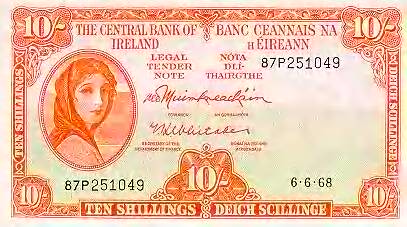
We have a custom, though I'm not sure if its an Irish custom or just a O'Callaghan tradition. We put a bit of money out side the house on the 31st of this month and it is supposed to bring you money for the coming year. Last year I didn't have and "real" money so I put out my check book (I don;t know if that counts or not this year I'll put out ten Shillings (about 25 cents in American money) [ I told you I was a poor preacher , Oh you heard that one have you?]

Well since I am in the United States now I need to find a place to teach/preach so many churches but they are looking for the "perfect' pastor/teacher. Me? Well I like to find a group that is not so dead that they aren't willing to show up once in a while and help me open the Book and read a bit, maybe even want to share with those who need a little bit of help. I bet I've sent out more resumes that there are web sites on Google/MSN/Yahoo/and Bravenet combined. I quit counting resumes after we hit 2000. Makes one wonder if the churches seeking a pastor really want one called by God or just someone till fill up a Sunday sermon with nonsense.

Would I be willing to move? Duh yes, not many people can fit in the little mobile home that we in now! Where do I want to go? Some place where the people have an interest in improving their lot. I mean. for example.

In my last church I told them that unless all agreed that I should come I would not! And that was the same church in which I stood up one morning as they were about to take up the collection and said " If you can't afford to put anything in the collection, then take something out!" The treasurer had to receive CPR. No one ever did that before. You can count me to do the unexpected.

There was a movie called "The shoes of the Fisherman" staring Anthony Quinn as the Roman Catholic Pope when faced with a world wide famine sold all of the Catholic Church's possessions and used the money to help the poor. I guess that's what I was thinking.

Not that this church was rich they couldn't afford to pay me half the time. But they were dear people and I loved them very much. I guess you would call me a Grace Believer. That is I believe that God has things under control and He wants me to jump in once in a while a teach a bit. Which I do when He lets me.

Here are some jokes I shared with my last church. Hope you like them as much as they did!

An exasperated mother, whose son was always getting into mischief, finally asked him, "How do you expect to get into Heaven?"
The boy thought it over and said, "Well, I'll just run in and out and in and out and keep slamming the door until St. Peter says, 'For Heaven's sake, Jimmy, come in or stay out!'"

~~~~~


Finding one of her students making faces at others on the playground, Ms. Smith stopped to gently reprove the child. Smiling sweetly, the Sunday School teacher said, "Bobby, when I was a child, I was told that if I made ugly faces, it would freeze and I would stay like that."
Bobby looked up and replied, "Well, Ms. Smith, you can't say you weren't warned."


~~~~~


A little girl became restless as the preacher's sermon dragged on and on. Finally, she leaned over to her mother and whispered, "Mommy, if we give him the money now, will he let us go?"


~~~~~


A boy was watching his father, a pastor, write a sermon. "How do you know what to say?" he asked.
"Why, God tells me."
"Oh, then why do you keep crossing things out?"


Smile God loves you and so do I,

Denis

Saturday, December 26, 2009

He's Here -The Great day has arrived


Gentle Reader,


Marti and I wish you a very Merry and blessed Christmas from our home to yours. Our last story is one of the best from a dear brother and it is called:


Christmas Hardships


The Workman


"Do you really expect me to go to Bethlehem?" Joseph banged down his chisel on the scarred bench.


Ephraim, his cousin, had just entered the low workshop. "You don't have a choice, Joseph. If you don't go the Romans will confiscate your house and your precious tools. Just try to carve a yoke with your fingernails."


"What are we, cowards?" the carpenter retorted. "Mark my words, Ephraim, this 'Enroll-in-your-ancestral-city' business is nothing more than a way to squeeze more taxes out of us. If we give into those foreign tyrants now they'll just be back for more money."


"What's more," Joseph continued, "you're crazy if you think I'd take Mary on a trip this month. She'd probably have the baby on the way!"


"Couldn't you just leave her with your mother for a couple of weeks? She'd be all right. Nobody says the women have to go. It's the heads of households who have to register."


"Register, hah! Be taxed, you mean."


"So why not leave her at home?"


Joseph brushed the woodchips aside and motioned for his cousin to sit down. The carpenter spoke in a low but earnest voice. "Mary's aunt has made life miserable for her ever since she found out Mary was pregnant. Some people were willing to let it go. Not Tabitha."


"She got my wife all stirred up about it," Ephraim volunteered.


"Not just your wife. Most of the women in this town go out of their way to avoid her. At the village well they whisper, "Little slut!" just loud enough for her to hear. Many's the day she's come running home in tears."


"People sure can be cruel," Ephraim said. "At least you and Mary went ahead and got married."


Joseph bit his lip, but didn't say more.


Ephraim got up. "Well, you are going to Bethlehem, aren't you? You'd be a fool to get the Romans on your back. You know what they did to old Ben."


Joseph stood up slowly. "Yes, I'll go. But Mary'll have to come along. There's no way I'd leave her in Nazareth by herself!"


However, when Joseph talked to Mary about it, she didn't seem nearly as sure as her husband. "How could I walk all that way?" she said. "I waddle now. I just can't make it."


"Mary, we'll bring old Jake. You can ride him when you get tired."


"Have you ever ridden on Jake?"


"Well, no."


"That animal is the most bony, jolting mule in Nazareth. I'd rather walk!"


She did ride, though ... some of the way. Joseph would finally stop for the day when Mary just couldn't take any more. He'd help her down off Jake, then he'd fix a fire while she would unload their heavy blankets and try to find some shelter under a tree or large rock.


Mary would always be the center of attention among the few women traveling that time of year.


"I remember when I was carrying Levi," one would start. "Made my feet swell. I couldn't do anything for months."


"That's nothing," replied another, "my sister got so big everyone thought she was carrying twins. But her time came there was only one baby. Died though."


Joseph glanced over at Mary in the flickering firelight. He could see fear flit across her face. Her hands moved to her swollen belly so she could feel the baby's reassuring kick.


The women didn't notice. The first one went on, "Oh, the pain's so awful! I'm glad I'm too old to have any more babies."


Joseph put his arm around Mary's shoulders and pulled her close. Only one more night on the road before Bethlehem.


They reached the sleepy village of Joseph's ancestors just about dusk the fifth day. Joseph went to the inn and nearby houses trying to find a place to sleep. "God," he whispered as he combed the town, "can't You find us a decent place to have this baby?" Nothing.


All at once he saw Mary's face tighten. She tried to suppress a groan as she fought with the pain. It was a long moment before she relaxed, but he could see worry written all over her.


Joseph went back to the innkeeper again. "Are you sure there isn't any room? My wife's about to have a baby. We've got to find a place out of this wind tonight!"


The innkeeper thought a while. "Did you try the house at the end of the street? They sometimes take people in."


"I tried an hour ago."


"Any relatives in town? Any second cousins?"


"No."


Mary was shivering now, in obvious discomfort. "Joseph," she said weakly, "I've got to lie down somewhere."


"Well, there's the stable in the back," offered the innkeeper at long last. "Of course, it's full of animals from all the visitors in town for that blasted Roman census. But if you can find a place in the corner, I guess that'd be okay." He paused. "Just don't keep the animals awake all night."


It was the other way around. The dozen donkeys in the strange barn never stopped moving. And the smell was overpowering to Mary who had been fighting nausea as her pains got stronger.


In the wee hours of the morning Joseph knocked on the innkeeper's door again.


"What do you want this time of night?" the innkeeper snarled when he finally came to the door.


"Is there a midwife in town?"


"Oh, it's you. A midwife? Yes, old Martha lives in a little house about three blocks from here. You go down the main road, turn left at the two-story house, and go to the alley. You can't miss it. You go down the alley and across the pasture. She lives in a shack just behind the third house after that."


"I ... I really don't think I should leave my wife. Her pains are coming awfully fast now.... Could you go?"


"Jonathan!" the innkeeper yelled into his darkened house. "Get up and fetch old Martha. A lady's having a baby in the barn. Hurry!"


He turned to Joseph as he closed the door. "Have some pity, man. My whole family's awake now."


Pretty soon the door opened again and a young lad ran off in the chilly air. After a while he returned, walking slowly so he wouldn't outdistance the old midwife whose arthritis certainly didn't to take to cold winter nights. The boy was shivering by the time he got to the stable.


"Here's Martha, sir," he muttered quickly, and darted back into the warmth of his house.


The old lady put them at ease right away. She had Joseph fetch water and cloths from the innkeeper. It must have been nearly two in the morning by the time the baby came, and another hour before Joseph dug into his robe for a few coins to give the old woman as she hobbled away.


Then he returned to his wife and took her hand as they looked into the puffy face of their son. Alone at last.


"I'm so tired, Joseph," Mary said, settling back into the blanket-covered straw.


The baby finally stopped crying and drifted off to sleep.


Joseph stirred a few minutes later as some men peered from the darkness into the lamp-lit stable. He nudged Mary awake and reached for his staff.


"What do you want?" Joseph said to the men in a forced whisper. "Don't wake the baby."


"We're shepherds," one called out. The baby started crying.


"We saw angels out on the hills an hour ago." The entire story tumbled out as the shepherds edged into the stable to see the baby. Joseph relaxed his grip on the staff.


The shepherd continued, "And the angel told us, 'To you is born this day in the City of David a Savior which is Messiah the Lord.' The angel even told us about the swaddling cloths and the manger here."


"The angel told you about the manger, too?" Joseph interrupted.


"Oh, yes. That's how we knew where to look."


Joseph glanced over at Mary. Her eyes met his. He squeezed her hand.


"This baby is the Messiah, isn't he?" Joseph said quietly. "After all these hassles I had started to question. But..." He paused. "It's almost like God planned the whole thing: the trip neither of us wanted to take." He chuckled. "He must have seen you on bony old Jake." Joseph laughed out loud. "Even this smelly old barn and it's manger."


He stood up, still chuckling. "What do you know? In spite of the problems--no, in the midst of the problems--God's been at work all along."


Love,


Denis and Marti

Thursday, December 24, 2009

Nollaig Shona dhuit/dhíbh*

* Happy Christmas to you (In Irish)
Christmas isn't for just Kids!


Gentle Reader,


You have seen the bad side of people now lets look at what I see in you!


Have you bought your Christmas gifts yet? No? Neither have I! Well We both Herself and me wish you a very Merry Christmas! Here is a wee bit of the customs in Ireland.


In many rural areas of Ireland still today the custom of whitewashing the outhouses and stores prevails. At One time, it was the whole farm, inside and out. The women would scrub and polish everything til it shone, and the men would take a bucket of whitewash, or limewash, and purify everything in honour of the coming of the Christ child.


This custom goes back long before Christianity or even Celtic civilisation. It was a purifying ceremony from the most ancient of times, the ancient Mesopotamians, 4000BC would cleanse their homes, sweep the streets even, in an attempt to assist their god in his battle against the powers of chaos. And in Central European lore, it was believed that the deity, Frigg, would check all the threshholds of each house to make sure they were swept clean. The links are so tightly intertwined, it becomes difficult to separate one belief from another, Christmas is like a Tapestry, tightly and colourfully woven. It is almost impossible to find a thread and trace it to its beginning in the picture. From this ancient custom comes the modern traditions of putting up fresh curtains, a special Christmas Bedcover, cushions and table linens etc. The whitewashing of the house.


And now what I see in each of you


Dear Sir,


I am one of America's soldiers who received a copy of "A Soldier's Christmas" over the internet, and I just wanted to take this opportunity to thank you for giving some of my friends and family an opportune way to say 'thanks.' It meant a lot to me.


I have not been stationed in the US since 1995, and the nature of my job will keep me overseas throughout my career. Although I am not always viewed as that soldier with "dusty boots," I know all too well what it is like to be away from home for so long -- especially during the holidays. I would like, however, to take this opportunity to thank you, and America, for being the fine, grand, noble Nation that makes each and every one of us out here serving in the military extremely proud of the country and the people we protect.


You don't necessarily have to pray for us soldiers, as we have chosen this life....and we will sacrifice our life for OUR people and OUR country. No, do not pray for us this holiday season.....Pray for OUR Nation and Her people......for only then will the life we 'chose' be worthwhile.


Yes, I do pray for peace on Earth...always. But, "there will be wars, and rumors of wars," so, in the meantime; maybe, just maybe, this year you can put out a suggestion to OUR American people......


We tend to fly our flag on 4th of July, we tend to fly our flag on Veteran's Day......maybe this year, through your web-site, you could maybe "ask" the American people to put a small American Flag on their Christmas Tree, amongst their ornaments, (or within their own religious ceremony/custom) just to "remember." A small reminder that "we" are free to celebrate whatever holiday, however we please, because of that flag and what She represents.


Sir, I have volunteered to protect ALL Americans....Christian, Jewish, Agnostic, even Atheist......it is my proud honor to do so.... and all I ask is that maybe, during this "holiday" season (whether one believes in it or not) is your help in asking "America" to wave Her flag in Unity and be thankful for our Grand Nation. It would mean a lot to us out here, wherever we are......


God Bless us Gentle reader, God Bless us every one!


Love,


Denis & Marti