Tuesday, December 14, 2010

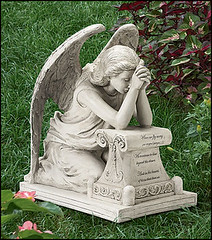
Home going "the Call"

greiving

Gentle readers,

Today we were awakened by the ringing of the telephone... we were expecting the call at 2:30 or 3:00 .m. ... It came at 9:30 a.m. It was My brother-in-law, Doug, "Mom has left us"... Ruth my mother in law and Marti’s mother battled Cancer for over a year.... we knew it was just a matter of time but... we never are in much of a hurry to meet Our Lord. Perhaps it’s because this life is all we know... rather like a baby being born who comes out of the comfort of the womb, crying... not knowing what to expect. Many are afraid of death, even my favorite Apostle Paul quoting the prophet Hosea said "O death, where is your sting? Hades, where is your victory?" (1 Corinthians 15:55) -Hos. 13:14 [ I will ransom them from the hand of Sheol; I will redeem them from death. O death, where are your plagues? O Sheol, where is your ruin? Repentance is hidden from My eyes.].

We weep with our brothers and sister at each loss, for we are few and the enemy are many. But it is not loss to Our Father in heaven whose timing is perfect.

Because Marti is bed fast we will not go to a funeral we will as we always do grieve our loss in the privacy of our small apartment. The angels are always near to those who are grieving, to whisper to them that their loved ones are safe in the hand of God. We take comfort that Doug and "Dad’ will be surrounded by those who will weep for the loss "they know not, nor do they understand", that this is not defeat but victory! For death is no more than a turning of us over from time to eternity

Another star is born Gentle Reader, perhaps they are not the stars, but rather openings in Heaven where the love of our lost ones pours through and shines down upon us to let us know they are happy.

We rejoice in the home going of our sister and mother, Ruth Brodt who leaves a hole in the hearts of Joe "dad and husband" Doug son and brother to Marti daughter and wife to Himself.

 Life is eternal, and love is immortal,
and death is only a horizon;
and a horizon is nothing save the limit of our sight.

When you lose someone you love,
Your life becomes strange,
The ground beneath you becomes fragile,
Your thoughts make your eyes unsure;
And some dead echo drags your voice down
Where words have no confidence
Your heart has grown heavy with loss;
And though this loss has wounded others too,
No one knows what has been taken from you
When the silence of absence deepens.

Flickers of guilt kindle regret
For all that was left unsaid or undone.

There are days when you wake up happy;
Again inside the fullness of life,
Until the moment breaks
And you are thrown back
Onto the black tide of loss.Days when you have your heart back,
You are able to function well
Until in the middle of work or encounter,
Suddenly with no warning,
You are ambushed by grief.

It becomes hard to trust yourself.
All you can depend on now is that
Sorrow will remain faithful to itself.
More than you, it knows its way
And will find the right time
To pull and pull the rope of grief
Until that coiled hill of tears
Has reduced to its last drop.

Gradually, you will learn acquaintance
With the invisible form of your departed;
And when the work of grief is done,
The wound of loss will heal
And you will have learned
To wean your eyes
From that gap in the air
And be able to enter the hearth
In your soul where your loved one
Has awaited your return
All the time.

Denis

Sunday, December 05, 2010

"Doc Notes" Concluding suggestions on Genesis

Concluding suggestions on Genesis

Gentle readers,

It would be difficult not to continue to search the scripture in Genesis with you until we have exhausted both our wits and our patience over the rich mine field that is our first book of our Bible. But for me to do so would deprive you of much thought and study and we are told “Study to shew thyself approved unto God, a workman that needeth not to be ashamed, rightly dividing the word of truth.” (2Ti 2:15 KJV) Which could have been better translated this way “You, yourself be diligent to show to Christ ( Alexandrian copy reads, "to Christ") that you may be an approved worker who has nothing to be ashamed of, handling the word of (the)truth with precision. [ my translation]

It is after all gentle reader, your responsibility and yours alone to undertake the path that God places you upon. We as teachers can only point out the way we have gone and hope to impart some small help for your journey.

So with that in mind let me suggest that the book of Genesis should be also studied biographically. It is rich in human characters. Study for instance, the seven great men before-mentioned, noting the dominant feature or determining crisis in the recorded history of each-Abel the worshipper, Enoch the walker, Noah the worker, Abrham the wanderer, Isaac the watcher, Jacob the wrestler, Joseph the waiter. What character studies are Esau, Lot, Cain!- illustrating, respectively, “the lust of the flesh, and the lust pf the eyes, and the pride of life”(1 John 2:16). Nimrod, Sarah, Labon, Judah, and others well repay study.

Genesis should be specially studied spiritually. No book in the Old Testament is richer in spiritul values. Here is a life time of rewarding study in itself! It’s spiritual teachings fall into two categories (1) truths to enlighten the mind (2) lessons to regulate the life. As to the former we may mention - the presence and gracious purpose of God in human history: the presence and purpose of evil a personal devil and his names in scripture and history (Abaddon, accuser, adversary Antichrist, author of all sin, Beelzebub, chief of the demons, deceiver, destroyer, devourer, dragon, enemy of righteousness, evil one, evil spirit, fallen angel, father of all lies, father of contention, founder of murder, Great Antichrist, great dragon, liar from the beginning, Lucifer, Mammon, murderer from the beginning, old serpent, Perdition, prince of darkness. prince of devils, prince of the power of the air, prince of this world, Satan, serpent, slanderer, Son of Perdition, Son of the Morning, spoiler, tempter wicked one). The origin and progress of sin in the human race; the depravity of fallen human nature;the Divine prevision and provision; the ministry of angels; the Divine sovereignty and condescension; these being but a few of many tremendous truths.

As for lessons which abound here- to cite only one of many fruitful instances- what spiritual lessons we find in Abrham. Take for example Ch.12:4-9 (faith responding) then faith receeding (12:10-20) then faith returning (13:1-4). These lessons are important beyond expression.

Then again Genesis should be studied prophetically. The whole of subsequent revelation and history is really about the unfolding of the prophecies in the first book of Scripture. Here are the Prophecies concerning Christ, the earth, race (9:25-27), concerning Israel (13:14-17, 22:15-18) concerning other nations (17:19-20, 25:23) In the light of many wonderful fulfilments these give unanswerable evidence to the superhuman origin of the Scriptures.

Genesis should also be studied dispensationally. There has been much discussion of late as to whether one shoul embrace covenant theology or dispensational Theology. My answer is both! For you one can not have the one without considering the other. To do so is to allow yourself be be incomplete intellectually.
Covenant Theology isn’t so much a ‘theology’ in the sense of a systematic set of doctrine as it is a framework for interpreting Scripture.

Where dispensationalism sees the Scriptures unfolding in a series of (typically) seven ‘dispensations’ (a ‘dispensation’ can be defined as the particular means God uses to deal with man and creation during a given period in redemptive history), Covenant Theology looks at the Scriptures through the grid of the covenant. Covenant Theology defines two overriding covenants: the covenant of works (CW) and the covenant of grace (CG). A third covenant is sometimes mentioned; namely, the covenant of redemption (CR), which logically precedes the other two covenants. We will discuss these covenants in turn. The important thing to keep in mind is that all of the various covenants described in Scripture (e.g., the covenants made with Noah, Abraham, Moses, David and the New Covenant) are outworkings of either the covenant of works or the covenant of grace.

There are other ways of studying Genesis such as geographically, critcally, textually but we will allow to to find your own path as we continue to move forward to the next book of Exodus .

Second book of the Pentateuch, known in Hebrew as Shemot ("Names") from the second word of the opening sentence. In the Midrash it is referred to as Sefer ha-Ge'ulah ("the Book of Redemption"), because of its content; the Greek Septuagint, however, calls it Exodos, "the Departure from Egypt."

Following the Latin Vulgate, printed Hebrew Bibles divide Exodus into 40 chapters and 1,209 verses. The Babylonian cycle of readings (which is followed today by all Jewish communities) divides the book into 11 sections (sedarot), but according to the Palestinian Triennial Cycle of Second Temple times it contains 33 (or 29) sections. Traditionally, the book encompasses a period of 129 years, from the death of Joseph to the building of the Sanctuary. Jewish tradition also maintains that Exodus, like the rest of the Pentateuch, was written by Moses under Divine inspiration.

In terms of form and content, the volume is a direct continuation of the Book of Genesis, but constitutes a separate unit. Genesis describes the beginning of the Israelite people, first as individuals and later as a family; Exodus describes Israel's transformation into a nation. The Book of Genesis tells of God's assurance to the patriarchs that they will have descendants and a Promised Land, whereas Exodus demonstrates the gradual fulfillment of these promises in three stages: (1) The redemption of the Israelites from Egypt; (2) The Covenant made by God with His people; and (3) The building of the Sanctuary.

The only hint concerning the historicity of events described in te book is the mention of two Egyptian cities, Pithom and Raamses (Ex. 1:11). Raamses was the capital of Egypt under the 19th dynasty, and was built by Ramses II (Usermare Ramses, 1294-1224 BCE). It is generally assumed that Ramses II was "the Pharaoh of the Oppression" and that the Exodus from Egypt took place during the reign of his son and heir, Baenre Merneptah (1224-1204 BCE).

Among Bible critics, proponents of the documentary theory maintain that Exodus contains elements of three sources (J, E, and P) that were combined. The school of "form criticism" regards this volume as a narrative epic created to explain the festival of Passover. Chapters 1-15 constitute "the Passover legend," representing the Sitz im Leben of the book. According to this view, the sources which deal with the Giving of the Torah, the various laws (chapters 21-24), and the details of the Sanctuary (Tabernacle) are of later origin.

To be continued. . . Lessson 3 part 1 Exodus


.

Sunday, November 21, 2010

"Doc Notes" lesson 2 Part 21

Joseph And His Brethren Dispensationally Considered

Dear Gentle readers,
Since we left Genesis 37-38 nothing more has been heard of the family of Jacob. Joseph is the one upon whom the Holy Spirit has concentrated attention. In Genesis 37 we saw how Joseph was sent by his father on an errand of mercy to his brethren, inquiring after their welfare; that Joseph came unto them and they received him not; that, instead, they envied and hated him, and sold him into the hands of the Gentiles. Then, we have followed his career in Egypt, and have seen how that the Egyptians, too, treated him badly, casting him into the place of shame and humiliation. Also, we have seen how God vindicated His faithful servant, bringing him out of prison-house and making him governor of all Egypt. Finally, we have learned how that Joseph's exaltation was followed by a season of plenty, when the earth brought forth abundantly, and how this in turn, was followed by a grievous famine, when Joseph came before us as the dispenser of bread to a perishing humanity. But during all this time the brethren of Joseph faded from view, but now, in the time of famine they come to the front again.

All of this is deeply significant, and perfect in its typical application. Joseph foreshadowed the Beloved of the Father, sent to His brethren according to the flesh, seeking their welfare. But they despised and rejected Him. They sold Him, and delivered Him up to the Gentiles. The Gentiles unjustly condemned Him to death, and following the crucifixion, His body was placed in the prison of the tomb. In due time God delivered Him, and exalted Him to His own right hand. Following the ascension, Christ has been presented as the Savior of the world, the Bread of Life for a perishing humanity. During this dispensation the Jew is set aside: it is out from the Gentiles God is now taking a people for His name. But soon this dispensation shall have run its appointed course and then shall come the tribulation period when, following the removal of the Holy Spirit from the earth, there shall be a grievous time of spiritual famine. It is during this tribulation period that God shall resume His dealings with the JewsÑthe brethren of Christ according to the flesh. Hence, true to the and-type, Joseph's brethren figure prominently in the closing chapters of Genesis. Continuing our previous enumeration we shall now follow the experiences of the brethren from the time they rejected Joseph.

Joseph's brethren are driven out of their own land. In Genesis 37 the sons of Jacob are seen delivering up Joseph into the hands of the Gentiles, and nothing more is heard of them till we come to Genesis 42. And what do we read concerning them there! This: "Now when Jacob saw that there was corn in Egypt, Jacob said unto his sons, Why do ye look one upon another? And he said, Behold, I have heard that there is corn in Egypt: get you down thither, and buy for us from thence; that we may live, and not die. And Joseph's ten brethren went down to buy corn in Egypt. And the sons of Israel came to buy corn among those that came: for the famine was in the land of Canaan" (Gen. 42:1-3, 5). Canaan was smitten by the scourge of God. It was eaten up by a famine. Jacob and his family were in danger of dying, and the pangs of hunger drove the brethren of Joseph out of their land, and compelled them to journey down to EgyptÑsymbol of the world. This was a prophecy in action, a prophecy that received its tragic fulfillment two thousand years later. Just as a few years after his brethren had rejected Joseph, they were forced by a famine (sent from God) to leave their land and go down to Egypt, so a few years after the Jews had rejected Christ and delivered Him up to the Gentiles, God's judgment descended upon them, and the Romans drove them from their land, and dispersed them throughout the world.
Joseph was unknown and unrecognized by his brethren. "And Joseph was the governor over the land, and he it was that sold to all the people of the land. And Joseph's brethren came, and bowed down themselves before him with their faces to the earth. And Joseph knew his brethren, but they knew not him" (Gen. 42:6, 8). Joseph had been exalted over all the house of Pharaoh, but Jacob knew it not. All these years he thought that Joseph was dead. And now his family is suffering from the famine, the scourge of God, and his sons, driven out of Canaan by the pangs of hunger, and going down to Egypt, they know not the one who was now governor of the land. So it has been with Jacob's descendants ever since the time they rejected their Messiah. They received not the love of the truth, and for this cause God has sent them strong delusion that they should believe a lie. They know not that God raised the Lord Jesus: they believe He is dead, and through all the long centuries of the Christian era a veil has been over their hearts, and the beginning of the tribulation period will find them still ignorant of the exaltation and glory of the Lord Jesus Christ.
Joseph, however, saw and knew his brethren. "And Joseph saw his brethren, and he knew them" (Gen. 42:7). Yes, Joseph "saw" his brethren, his eye was upon them, even though they knew him not. So the eye of the Lord Jesus has been upon the Jews all through the long night of their rejection. Hear His words (as Jehovah) through Jeremiah the prophet, "For mine eyes are upon all their ways: they are not hid from My face, neither is their iniquity hid from Mine ÔEyes'" (Gen. 16:17). So, too, through Hosea, He said, "I know Ephraim, and Israel is not hid from Me" (Gen. 5:3).
Joseph punished his brethren. "And Joseph saw his brethren, and he knew them, but made himself strange unto them, and spake roughly unto them . . . and he put them all together into ward three days" (Gen. 42:7, 17). We quote here from the impressive words of Dr. Haldeman: "Joseph was the cause of their troubles now. Joseph was punishing them for their past dealing with himself. The secret of all Judah's suffering during the past centuries is to be found in the fact that the rejected Messiah has been dealing Ôroughly' with them. He has been punishing them, making use of their willfulness and the cupidity of the nations, but, all the same, punishing them. ÔMy God will cast them away, because they do not hearken unto Him: and they shall be wanderers among the nations' (Hos. 9:17). ÔFor I say unto you, Ye shall not see Me henceforth, till ye shall say, Blessed is He that cometh in the name of the Lord.' (Matthew 23:38, 39) ÔThat upon you may come all the righteous blood shed upon the earth, from the blood of righteous Abel unto the blood of Zecharias, son of Barachias, whom ye slew between the temple and the altar. Verily I say unto you, All these things shall come upon this generation (nation)' (Matthew 23:35, 36). Nothing can account for the unparalleled suffering of this people, but the judgment and discipline of the Lord."

Joseph made known to them a way of deliverance through Substitution. "And he put them all together into ward three days. And Joseph said unto them the third day, this do, and live, for I fear God. If ye be true men, let one of your brethren be bound in the house of your prison; go ye, carry corn for the famine of your houses . . . And he took from them Simeon, and bound him before their eyes" (Gen. 42:17-19, 24). Once more we quote from Dr. Haldeman's splendid article on Joseph:
"On the third day he caused Simeon to be bound in the place of his brethren, and declared that by this means they might all be delivered, in the third day era, that is to say, on the resurrection side of the grave. On the day of Pentecost, the apostle Peter presented our Lord Jesus Christ as the risen one whom God had exalted to be a Prince and a Savior unto Israel, declaring that if the latter should repent of their evil and sin toward Him whom He had sent to be Messiah and King, He would accept His death as the substitution for the judgment due them; that He would save them and send His Son again to be both Messiah and Savior."

Joseph made provision for his brethren while they were in a strange land. "Then Joseph commanded to fill their sacks with corn, and to restore every man's money into his sack, and to give them provision for the way; and thus did he unto them" (Gen. 42:25). Although they knew not Joseph, and although he spoke roughly unto his brethren and punished them by casting them into prison, nevertheless, his judgments were tempered with mercy. Joseph would not suffer his brethren to perish by the way. They were here in a strange land, and he ministered unto their need. So it has been throughout this dispensation. Side by side with the fact that the Jews have been severely punished by God, so that they have suffered as no other nation, has been their miraculous preservation. God has sustained them during all the long centuries that they have been absent from their own land. God has provided for them by the way, as Joseph did for his erring brethren. Thus has God fulfilled His promises of old. "For I am with thee, saith the Lord, to save thee: though I make a full end of all nations whither I have scattered thee, yet will I not make a full end of thee; but I will correct thee in measure, and I will not leave thee altogether unpunished" (Jer. 30:11). And again; "Thus saith the Lord God; although I have cast them far off among the heathen, and although I have scattered them among the countries, yet will I be to them as a little sanctuary in the countries where they shall come" (Ezek. 11:16).

Joseph was made known to his brethren at the second time. This was emphasized by Stephen in his parting message to Israel; "And at the second time Joseph was made known to his brethren" (Acts 7:13). At their first visit, though Joseph knew his brethren, they knew not him. It was on the occasion of their second visit to Egypt that Joseph revealed himself to them. How marvelously accurate the type! The first time the Lord Jesus was seen by His brethren after the flesh, they knew Him not, but when they see Him the second time He shall be known by them.

It is significant that the Holy Spirit has singled out this highly important point, and has repeated it, again and again, in other types. It was thus with Moses and Israel. "And it came to pass in those days, when Moses was grown, that he went out unto his brethren, and looked on their burdens; and he spied an Egyptian smiting a Hebrew, one of his brethren. And he looked this way and that way, and when he saw that, there was no man, he slew the Egyptian, and hid him in the sand" (Ex. 2:11, 12). And how did his brethren appreciate his intervention on their behalf? They despised him; they said, "Who made thee a prince and a judge over us" (Ex. 2:14). They said, in effect, as Israel said of Christ, "We will not have this Man to reign over us" (Luke 19:14). But the second time (after a long interval, during which Moses was hid from them) that he appeared unto them, they accepted him as their Leader.

It was thus with Joshua and Israel. The first time that Joshua appeared before the Nation was as one of the two "spies" who brought to them a favorable report of the land, and counselled his brethren to go up and possess it. But Israel rejected his message (Num. 13). It was not until long after when Joshua came before the people, publicly, for the second time, that they accepted him as their Leader, and were conducted by him into their inheritance.

The same principle is illustrated, again, in the history of David. David was sent by his father seeking the welfare of his brethren; "And Jesse said unto David his son, take now for thy brethren an ephah of this parched corn, and these ten loaves, and run to the camp to thy brethren. And carry these ten cheeses unto the captain of their thousand, and look how thy brethren fare, and take their pledge" (1 Sam. 17:17-18). But when he reached them, they resented his kindness, and their "anger was kindled against David" (See 1 Samuel 17:28), and it was not until years later that they, together with all Israel, owned him as their King.

Each of these was a type of the Lord Jesus. The first time He appeared to Israel they received Him not; but at His second advent they shall accept Him as their Leader and King.

Joseph's brethren confess their Guilt in the sight of God. "And Judah said, What shall we say unto my lord? What shall we speak? or how shall we clear ourselves! God hath found out the iniquity of thy servants" (Gen. 44:16). There are several striking verses in the prophets which throw light upon the antitypical significance of this point. "And ye shall know that I am the Lord, when I shall bring you into the land of Israel, into the country for the which I lifted up Mine hand to give it to your fathers. And there shall ye remember your ways, and all your doings, wherein ye have been defiled; and ye shall loathe yourselves in your own sight for all your evils that ye have committed" (Ezek. 20:42, 43). And again, "I will go and return to My place, till they acknowledge their offense, and seek My face; in their affliction they will seek me early" (Hosea 5:15). So it was with Joseph; he did not reveal himself to his brethren until they had acknowledged their "iniquity." And so will Israel have to turn to God in real and deep penitence before He sends His Son back to them (see Acts 3:19, 20).

Joseph's brethren were also, at first, troubled in his presence. "And Joseph said unto his brethren, I am Joseph; doth my father yet live? And his brethren could not answer him, for they were troubled at his presence" (Gen. 45:3). How perfectly does antitype correspond with type! When Israel shall first gaze upon their rejected Messiah, we are told, "And they shall look upon Me whom they have pierced, and they shall mourn for Him, as one mourneth for his only son, and shall be in bitterness for him as one that is in bitterness for his first born" (Zech. 12:10). As Israel shall learn then the awfulness of their sin in rejecting and crucifying their Messiah, they shall be "troubled" indeed.

Joseph acted toward his brethren in marvelous grace. "And Joseph said unto his brethren, Come near to me, I pray you. And they came near, And he said, I am Joseph your brother, whom ye sold into Egypt. Now therefore be not grieved, nor angry with yourselves, that ye sold me hither; for God did send me before you to preserve life . . . Moreover he kissed all his brethren, and wept upon them, and after that his brethren talked with him" (Gen. 45:4, 5, 15). So shall it be when Israel is reconciled to Christ; "In that day there shall be a fountain opened to the house of David and to the inhabitants of Jerusalem for sin and for uncleanness" (Zech. 13:1). Then shall Christ say to Israel, "For a small moment have I forsaken thee, but with great mercies will I gather thee. In a little wrath I hid My face from thee for a moment; but with everlasting kindness will I have mercy on thee, saith the Lord thy Redeemer" (Isa. 54:7, 8).

Joseph was revealed as a Man of Compassion. "And there stood no man with him, while Joseph made himself known unto his brethren, And he wept aloud" (Gen. 45:1-2). Seven times over we read of Joseph weeping. He wept when he listened to his brethren confessing their guilt (Gen. 42:24). He wept when he beheld Benjamin (Gen. 43:30). He wept when he made himself known to his brethren (Gen. 45:1-2).. He wept when his brethren were reconciled to him (Gen. 45:15). He wept over his father Jacob Genesis (Gen. 46:29). He wept at the death of his father (Gen. 50:1). And he wept when, later, his brethren questioned his love for them (Gen. 50:15-17). How all this reminds us of the tenderheartedness of the Lord Jesus Christ, of whom we read so often, He was "moved with compassion," and twice that He "wept"Ñonce at the graveside of Lazarus, and later over Jerusalem. 1 Joseph revealed himself to Judah and his brethren, before he was made known to the rest of Jacob's household. So, too, we are told in Zechariah 12:7, "The Lord also shall save the tents of Judah first."

Joseph then sends for Jacob. "In Scripture, Judah stands for Judah and Benjamin considered together. You will note that it is Judah and Benjamin who are made prominent in the revelation of Joseph. Jacob in prophetic language signifies the Ten Tribes. Sending for Jacob and his household, in typical language, is sending for the Ten Tribes of Israel. Precisely as the type brings Judah before the self-disclosed Joseph, and then Jacob is brought into the land in the presence of Joseph, so the scriptures clearly teach us that after the Lord comes to repentant Judah and is received by them at Jerusalem, He will send for the remaining household of Jacob, for the lost and wandering tribes of Israel, to come into the land to own and greet him. ÔAnd they shall bring all your brethren for an offering unto the Lord, out of all nations' (Isa. 66:20)"ÑDr. Haldeman.

Joseph's brethren go forth to proclaim his glory. "Haste ye, and go up to my father, and say unto him, thus saith thy son Joseph, God hath made me lord of all Egypt; come down unto me, tarry not . . . And ye shall tell my father of all my glory in Egypt" (Gen. 45:9, 13). In like manner, after Israel has been reconciles to Christ, they shall go forth to tell of the glories of their King: "And I will send those that escape of them unto the nations, to Tarshish, Pul and Lud, that draw the bow, to Tubal and Javan, to the isles afar off, that have not heard My fame, neither have seen My glory, and they shall declare My glory among the Gentiles" (Isa. 66:19). And again: "And the remnant of Jacob shall be in the midst of many people as a dew from the Lord, as the showers upon the grass, that tarrieth not for man" (Micah 5:7).
Joseph makes ready his chariot and goes forth to meet Jacob. "And Joseph made ready his chariot, and went up to meet Jacob his father" (Gen. 46:29). Says Dr. Haldeman, "This is really the epiphany of Joseph. He reveals himself in splendor and Kingliness to his people. He meets Judah in Goshen first and then meets his father, the household of Jacob. This is a representation of the truth as we have already seen it. It is the coming of Christ in His glory to meet Judah first, and then all Israel. Our attention is specially drawn to his appearing to the people in chariots of glory. So of the greater Joseph we read, ÔFor, behold, the Lord will come with fire, and with His chariots like a whirlwind' (Isa. 66:15)."

Joseph settles his brethren in a land of their own. "And Israel dwelt in the land of Egypt, in the country of Goshen; and they had possessions therein, and grew, and multiplied exceedingly" (Gen. 47:27). Goshen was the best part of the land of Egypt (symbol of the world). As Pharaoh had said, "The land of Egypt is before thee, in the best of the land make thy father and brethren to dwell; in the land of Goshen let them dwell" (Gen. 47:6). So Palestine, when restored to its pristine beauty and fertility, shall be "the best land" in all the earth; and there, in the Millennium, shall Israel have "possessions" and "multiply exceedingly."

Joseph's brethren prostrate themselves before him as the Representative of God. "And his brethren also went and fell before his face; and they said, Behold we be thy servants. And Joseph said unto them, Fear not; for (am) I in the place of God?" (Gen. 50:18, 19). The prophetic dream of Joseph is realized. The brethren own Joseph's supremacy, and take the place of servants before him. So in the coming Day, all Israel shall fall down before the Lord Jesus Christ, and say, "Lo, this is our God; we have waited for Him, and He will save us; this is the Lord; we have waited for Him, we will be glad and rejoice in His salvation" (Isa. 25:9).

We close at the point from which we started. Joseph signifies "Addition," and Addition is Increase, and "increase" is the very word used by the Holy Spirit to describe the dominant characteristic of the Kingdom of Him whom Joseph so wondrously foreshadowed. "Of the increase of His government and peace there shall be no end, upon the throne of David, and upon His Kingdom, to order it and to establish it with judgment and with justice from henceforth even for ever" (Isa. 9:7).

Saturday, November 20, 2010

Martha Stewart . . .

..will not be dining with us this Thanksgiving.

"I can't wait to go to the 1st ever on-line thanksgiving dinner "

Léitheoirí milis (Irish for )

Gentle Readers,

I know that there some of you all ready looking forward to my on-line thanksgiving dinnner and while I've got things well in hand I don't want you to be too disappointed so I'm telling you in advance, so don't act surprised. Since Ms. Stewart won't be coming, I've made a few small changes:

Our sidewalk will not be lined with homemade, paper bag luminaries. After a trial run, it was decided that no matter how cleverly done, rows of flaming lunch sacks do not have the desired welcoming effect.

Once inside, our guests will note that the entry hall is not decorated with the swags of Indian corn and fall foliage I had planned to make. Instead, I've gotten the kids involved in the decorating by having them track in colorful autumn leaves from the front yard. The mud was their idea.

The dining table will not be covered with expensive linens, fancy china, or crystal goblets. If possible, we will use dishes that match and everyone will get a fork.

Since this IS Thanksgiving, we will refrain from using the plastic Peter Rabbit plate and the Santa napkins from last Christmas.

Our centerpiece will not be the tower of fresh fruit and flowers that I promised. Instead we will be displaying a hedgehog-like decoration hand-crafted from the finest construction paper. The artist assures me it is a turkey.

We will be dining fashionably late. The children will entertain you while you wait. I'm sure they will be happy to share every choice comment I have made regarding Thanksgiving, pilgrims and the turkey hotline. Please remember that most of these comments were made at 5:00 a.m. upon discovering that the turkey was still hard enough to cut diamonds.

As accompaniment to the children's recital, I will play a recording of tribal drumming. If the children should mention that I don't own a recording of tribal drumming, or that tribal drumming sounds suspiciously like a frozen turkey in a clothes dryer, ignore them. They are lying.

We toyed with the idea of ringing a dainty silver bell to announce the start of our feast. In the end, we chose to keep our traditional method. We've also decided against a formal seating arrangement. When the smoke alarm sounds, please gather around the table and sit where you like.

In the spirit of harmony, we will ask the children to sit at a separate table. In a separate room. Next door.

Now, I know you have all seen pictures of one person carving a turkey in front of a crowd of appreciative onlookers. This will not  Turkey Shoot be happening at our dinner. For safety reasons, the turkey will be carved in a private ceremony. I stress "private" meaning: Do not, under any circumstances, enter the kitchen to laugh at me. Do not send small, unsuspecting children to check on my progress. I have an electric knife. The turkey is unarmed. It stands to reason that I will eventually win. When I do, we will eat.

I would like to take this opportunity to remind my young diners that "passing the rolls" is not a football play. Nor is it a request to bean your sister in the head with warm tasty bread.

Oh, and one reminder for the adults: For the duration of the meal, and especially while in the presence of young diners, we will refer to the giblet gravy by its lesser-known name: Cheese Sauce. If a young diner questions you regarding the origins or type of Cheese Sauce, plead ignorance. Cheese Sauce stains.

Before I forget, there is one last change. Instead of offering a choice between 12 different scrumptious desserts, we will be serving the traditional pumpkin pie, garnished with whipped cream and small fingerprints. You will still have a choice; take it or leave it.

Martha Stewart will not be dining with us this Thanksgiving. She probably won't come next year either.

I am thankful.

In case you don't remember it's 7 day to Turkey day at Denis and Marti's

http://drcallahan.bravejournal.com/ and don't forget this is not church so those who come early don't get the best back seats.

Denis


Thursday, November 11, 2010

"Doc notes" Lesson 2 Part 20

Genesis 41
55. Joseph has a wife given to him. "And Pharaoh called Joseph's name Zaphnath-paaneah (the Egyptian meaning of which is ÔSavior of the world'); and he gave him to wife Asenath, the daughter of Potipharah priest of On" (Gen. 40:45). It is with some hesitation and much reluctance that at this point the writer finds himself differing from other students and commentators. Many whom we respect highly have regarded Asenath as here prefiguring the Church. Their principal reason for doing this is because Joseph's wife was a Gentile. But while allowing the force of this, we feel that it is more than counterbalanced by another point which makes against it. Believing that everything in this inspired narrative has a definite meaning and typical value, and that each verse has been put into its present place by the Holy Spirit, we are confronted with what is, to us, an insuperable difficulty if Asenath prefigures the Church, namely, the fact that in the very next verse which follows the mention of Pharaoh giving a wife to Joseph, we are told, "And Joseph was thirty years old when he stood before Pharaoh king of Egypt" (Gen. 41:46). Had this statement followed immediately after Genesis 41:14, which records Joseph being brought out of prison to appear before Pharaoh, and after this we had been told Joseph received his wife, we should be obliged to regard Asenath as a type of the Church; but as it is, we believe the typical application must be sought elsewhere, as we shall now proceed to point out.

The Holy Spirit has here (we are assured, with definite design) made mention of Joseph having a wife before his "age" is referred to, and before his life's work began. That the age of Joseph at the time his real work started, pointed to the age of the Lord Jesus when His public ministry commenced, is too obvious to admit of dispute. The fact, then, that the Holy Spirit speaks of Joseph's wife before the mention of him being thirty years of age, suggests to the writer that the typical significance of Asenath must be sought at some point of time before the Lord Jesus entered upon His life's mission. And that, of course, takes us back to Old Testament times. And there, we do learn of Jehovah (the Lord Jesus) possessing a "wife," even Israel. From the various Scriptures which bring this out we select two verses from Jeremiah 3. There, God's prophet, when expostulating with His wayward people, said, "Turn, O backsliding children, said the Lord; for I am married unto you" (Jer. 3:14); "Surely as a wife treacherously departeth from her husband, so have ye dealt treacherously with Me, O house of Israel, saith the Lord" (Jer. 3:20).

But against this it will be objected, How could Asenath, the Egyptian, wife of Joseph, typify Israel, the wife of Jehovah? Formidable as this objection appears at first sight, it is, nevertheless, capable of easy solution. The difficulty disappears if we go back to the time when Israel first became Jehovah's wife. Upon this point the Scriptures are very explicit. In Ezekiel 16, where the prophet is outlining the sad history of Israel, and where he says, "How weak is thine heart, saith the Lord God, seeing thou doest all these things, the work of an imperious whorish woman; in that thou buildest thine eminent place in the head of every way, and makest thine high place in every street; and hast not been as a harlot, in that thou scornest hire. But as a wife that committeth adultery, which taketh strangers instead of her husband;" here, at the outset, the prophet declares, "Thus saith the Lord God unto Jerusalem, Thy birth and thy nativity is of the land of Canaan; thy father was an Amorite, and thy mother a Hittite" (Ezek. 16:3). Here, then, we learn the origin (the moral origin, no doubt) of Israel, and how fittingly did Asenath, the Gentile, prefigure Jehovah's wife at that time! It was not until after Israel was redeemed from Egypt's bondage and corruption that they became separated from all other nations. If further confirmation be necessary it is found in Jeremiah 2:2, "Go cry in the ears of Jerusalem, thus saith the Lord; I remember thee, the kindness of thy youth, the love of thine espousals, when thou wentest after Me in the wilderness, in a land that was not sown." Israel, then, became Jehovah's in Egypt, when redeemed by blood, and after by power.

The issue from Joseph's marriage appears to us to fit in with the interpretation suggested above much better than with the common application of the type of Asenath to the Church. "Unto Joseph were born two sons" (Gen. 41:50), and does not this correspond with the history of Israel after she became Jehovah's wife? Was not the issue of that union the two kingdoms in the days of Rehoboam, and does not the meaning of the names of Joseph's two sons well describe the two kingdoms which, ultimately, issued from Israel? "Joseph called the name of the first born Manasseh" (Gen. 41:51), which signifies "Forgetting," and was it not that which, peculiarly, characterized the ten-tribed kingdom! "The name of the second called he Ephraim" (Gen. 41:52), which means "Fruitful," and such was Judah, from whom the Lord Jesus came!

56. Joseph's marriage was arranged by Pharaoh. How perfectly this agrees with what we read of in Matthew 22:2! "The kingdom of heaven is like unto a certain king, which made a marriage for His Son." The fact that Asenath is mentioned before we are told that Joseph was thirty years old when he stood before Pharaoh and began his life's work (type of Christ as He began His public ministry), and that the birth and naming of his sons occurred afterward, suggests (as is so often the case, both in types and prophecies) that there is here a double foreshadowment. This Gentile wife of Joseph points backward, first, to Israel's condition before Jehovah separated her from all other peoples and took her unto Himself; and, second, the type seems to point forward to the time when the Lord shall resume His dealings with her, see Jeremiah 31:31-34; Ezekiel 16:62, 63; Hosea 2:19-23; Isaiah 54:5-8[1]). Then, too, shall the names of Joseph's two sons be found to possess a double significance, for God's will "forget" Israel's past, and Israel shall then, as never before, be found "fruitful."

57. Joseph was thirty years old when he began his life's work. "And Joseph was thirty years old when he stood before Pharaoh king of Egypt" (Gen. 41:46). Every line in this wondrous picture has its own beauty and value. There is nothing here without profound significance. The Holy Spirit has a definite design in telling us what was Joseph's age when his public service began. He was thirty years old. How perfectly does type and antitype correspond! In Luke 3:23 we read, "And Jesus Himself began to be about thirty years of age." This was the age of the Lord Jesus when He commenced His public ministry, as it was Joseph's when he began his life's work.

58. Joseph went forth on his mission from Pharaoh's presence. "And Joseph was thirty years old when he stood before Pharaoh king of Egypt. And Joseph went out from the presence of Pharaoh" (Gen. 41:46). In this chapter PharaohÑas the one who ruled Egypt, who delighted in the excellencies of Joseph, who set Joseph over all his house, but who retained the position of supremacy as to the throneÑpre-figured God the Father. Viewed in this light, how blessed is the typical force of the last-made quotation. It was from Pharaoh's "presence" Joseph began his life's work! How marvelously this corresponds, again, with what we read in Luke 3! The words which immediately precede the mention of the Lord being thirty years old when His public service began, are the well-known utterance of the Father at the time of His baptism, "Thou art My beloved Son; in Thee I am well pleased" (Luke 3:22). So little is told us about the Savior before His active ministry began. The years spent at Nazareth, save for that one brief statement which covered the period of His boyhood, are passed over in silence. But as He came up out of the waters of baptism, the Father bore public testimony to the perfect life which His Son had lived here on earth, for, without doubt, the words, "In Thee I am well pleased," not only affirmed the excellency of Christ's person, but witnessed to the Father's approval of the thirty years which His incarnate Son had spent in obscurity. That which we desire to call attention to here is, just as Joseph went forth to his work from Pharaoh's "presence," so the Lord Jesus started out on His public service from the Father's presence, there manifested at the Jordan!

59. Joseph's service was an active and itinerant one. "And Joseph went out from the presence of Pharaoh, and went throughout all the land of Egypt" (Gen. 41:46). Joseph was no idler. He did not betray Pharaoh's confidence in him, but faithfully discharged his duty. He did not remain in the place of ease and comfort, but "went throughout all the land of Egypt." How well these words remind us of what we read in the Gospels concerning that One whom Joseph foreshadowed. Of Him we read, "And Jesus went about all Galilee, teaching in their synagogues, and preaching the gospel of the kingdom, and healing all manner of sickness" (Matthew 4:23). And again, "And Jesus went about all the cities and villages" (Matthew 9:35).

60. Joseph's exaltation was followed by a season of plenty. "And in the seven plenteous years the earth brought forth by handfuls. And he gathered up all the food of the seven years, which were in the land of Egypt, and laid up the food in the cities: the food of the field, which was round about every city, laid he up in the same. And Joseph gathered corn as the sand of the sea, very much, until he left numbering; for it was without number" (Gen. 41:47-49). Concerning the typical meaning of these verses we quote from Mr. Knapp: "These seven years of great abundance picture, if they do not typify, the present dispensation of grace in which it is our happy lot to live. ÔNow is the accepted time; behold, now is the day of salvation' (2 Cor. 6:2). There were seven years, not of plenty merely, but of Ôgreat plenty.' And during those years, we read Ôthe earth brought forth by handfuls.' It was a time of extraordinary abundance. And there was never a day like the one in which we live. Never before the present dispensation did God send His messengers out into all the world to proclaim to every sinner a free and a full salvation through faith in the name of His own exalted Son. There never was a time of such Ôabundance,' such Ôgreat plenty,' at any former period of God's dealings with the earth. And it is a remarkable fact, which I have not seen previously noted, that of all the distinct dispensations of time referred to in Scripture, the present is by far the longest. And oh, what a tale of grace this tells! God is indeed Ôlong suffering to usward, not willing that any should perish.'"

We doubt not that the saved of this dispensation are far in excess of any previous one. How few were saved during the centuries which passed from the days of Abel up to the Flood! How few appear to have been saved during the times of the patriarchs! How few among Israel, from the days of Joshua onwards, gave evidence of being born again! How few seem to have been saved during the public ministry of ChristÑbut a hundred and twenty were found in the upper room waiting for the Holy Spirit. How evident it is, then, that in contrast from all that has preceded, the earth is now bringing forth "in abundance"! It is the "much fruit" (John 12:24) which our Lord declared should issue from His death.

61. Joseph's exaltation was also followed by a period of famine. "And the seven years of plenteousness, that was in the land of Egypt, were ended. And the seven years of dearth began to come, according as Joseph had said; and the dearth was in all lands; but in all the land of Egypt there was bread" (Gen. 41:53, 54). Just as the "seven years"Ña complete periodÑpointed to the present interval of Grace, during which the great spiritual harvest is being garnered, so the "seven years" of famine (another complete period) look onward to that which shall follow the present dispensation. After the going forth of the Gospel of God's grace has accomplished its Divine purpose, and "the fulness of the Gentiles be come in" (Rom. 11:25), the Holy Spirit will depart out of the world, and there shall come that season which Scripture denominates "the great tribulation." Many are the passages which refer to that season. It is termed "the time of Jacob's trouble" (Jer. 30:7), for then will be the season of Israel's darkest hour. It was to this Daniel referred when he said, "There shall be a time of trouble, such as never was since there was a nation even to that same time" (Dan. 12:1). Concerning this same period the Lord Jesus spake, when He said, "For in those days shall be affliction, such as was not from the beginning of the creation which God created unto this time, neither shall be. And except that the Lord had shortened those days, no flesh should be saved" (Mark 13:19, 20). It will be the time when Satan is east down to the earth, when the Antichrist shall be here in full power, and when the storm of God's judgment shall burst upon the world. Morally and spiritually, it will be a time of "famine," and, like that which typified it in the days of Joseph, it shall be" very grievous" (Gen. 41:31). Moreover, the sphere encompassed by God's sore judgments in that day will be no local one, but just as we are told that the dearth of old was not confined to Egypt, but that "the famine was over the face of all the earth" (Gen. 41:56), so in Revelation 3:10 we are told, the "Hour of Temptation" comes upon "all the world, to try them which dwell upon the earth." It was of this same period that Amos prophesied, "Behold, the days come, saith the Lord God, that I will send a famine in the land, not a famine of bread, nor a thirst for water, but of hearing the words of the Lord. And they shall wander, from sea to sea, and from the north even to the east; they shall run to and fro to seek the Word of the Lord, and shall not find it" (Amos 8:11, 12). At present the world is enjoying the years of plenty, and how little it believes in the coming time of "famine," now so near at hand! Be warned then, dear reader, and "Seek ye the Lord while He may be found, call ye upon Him while He is near" (Isa. 55:6); for, if you are left on earth for the coming Day of Wrath, it shall be said, "the harvest is past, the summer is ended, and we are not saved" (Jer. 8:20).

62. Joseph is now seen dispensing bread to a perishing world. "And when all the land of Egypt was famished, the people cried to Pharaoh for bread: and Pharaoh said unto all the Egyptians, Go unto Joseph; what he saith to you, do" (Gen. 41:55). "It was a wonderful thing that the despised and rejected Jew should be the passport to the favor of Pharaoh; a wonderful thing that the rejected Jew should be exalted into the place of a Savior for a famine-smitten world; it was a wonderful thing that this rejected Jew should be the only Savior for that starving world. Equally true and wonderful is it today that Jesus the rejected Jew is the passport to the favor of God; that He is Ôthe Way, the Truth, and the Life,' and that Ôno man cometh unto the Father but by Him'; wonderful that this rejected Christ should be exalted into a Savior for a famine-smitten world; wonderful that this rejected Christ is the alone Savior for a starving world.

"Joseph was sent by his father to his brethren that he might be a blessing unto them, and they refused; then God turned their sin so that while it should remain as a judgment to them, it might become a blessing to others. In sending His Son to fulfill the promises made to the fathers, God would have brought covenant and numberless blessings to Israel; they refused, and God has made use of their blindness and sin to turn salvation to others. He has made the very sin and blindness of the people to be the occasion of grace and mercy to the whole world. Ô Through their fall salvation is come unto the Gentiles' (Rom. 11:11)."ÑDr. H.

63. Joseph alone dispensed the Bread of Life. It is beautiful to observe here how Pharaoh directed all who cried to him for bread to go unto Joseph: "And when all the land of Egypt was famished, the people cried to Pharaoh for bread: and Pharaoh said unto all the Egyptians: Go unto Joseph; what he saith to you, do" (Gen. 41:55). May we not say this was the Gospel for Egypt, the good news that Joseph was the appointed Savior, the glad tidings that whosoever was hungry might go to Joseph and obtain relief. How perfectly this foreshadowed the present Gospel of God's grace! When a guilty and convicted sinner, with a great hunger in his soul, cries unto God, what is His response? Why, does He not refer all such to the person of His blessed Son! Only in Christ is salvation to be found, for "neither is there salvation in any other: for there is none other Name under heaven, given among men whereby we must be saved" (Acts 4:12). Just as of old Pharaoh said to the Egyptians, "Go unto Joseph: what he saith to you, do," so, upon the Mount of Transfiguration the Father said to the disciples of Christ, "This is My beloved Son, in whom I am well pleased; hear ye him" (Matthew 17:5), and this is what He is still saying to men.

64. Joseph became a Savior to all peoples. "And all countries came into Egypt to Joseph for to buy corn; because that the famine was so sore in all lands"(Gen. 41:57). Joseph was raised up by God to meet a world-wide need. The "dearth" was in "all lands" (Gen. 41:54). But God, through Joseph, made ample provision to supply the wants of all. There was nothing provincial about the bounties which Joseph dispensed, he readily gave to each alike, no matter whether it was the Egyptians, his own brothers, or strangers from distant lands, all were fed. And how blessed to know this is equally true of the Antitype! God's Savior for sinners is no provincial one. He is for both Jew and Gentile, rich and poor, educated and illiterate, old and young, men and womenÑall, alike, may find in Him that which can satisfy their deepest need, the Gospel is for every creature, and its terms are, "Whosoever believeth in Him shall not perish, but have everlasting life." And just as peoples from "all countries came to Joseph," so those who will sing the new song in heaven shall proclaim, "Worthy art Thou to take the book, and to open the seals thereof; for Thou wast slain, and didst purchase unto God with Thy blood men of every tribe, and tongue, and people and nation" (Rev. 5:9).

65. Joseph had illimitable resources to meet the need of all. "And Joseph gathered corn as the sand of the sea, very much, until he left numbering; for it was without number" (Gen. 41:49). How abundant was God's provision! He provided with no niggardly hand. There was to be amply sufficient for every one that applied for the alleviation of his need. And how this reminds us of those blessed expressions which we meet with so frequently in the Epistles! There we read of" the riches of His grace" (Eph. 1:7), yea, "the exceeding riches of His grace" (Eph. 2:7). There we read of God being "rich in mercy" (Eph. 2:4), and, again, of His "abundant mercy" (1 Pet. 1:3). There we read of "the unsearchable riches of Christ" (Eph. 3:8), for "in Him dwelleth all the fullness of the Godhead bodily" (Col. 2:9). And again we are told, "The same Lord over all is rich unto all that call upon Him" (Rom. 10:12).

Thank God, the Savior He has provided for us is possessed of illimitable resources. There is no shortness or strainness in Him. There is infinite value in that precious blood which He shed upon the Cross to make an atonement for sin. There is infinite pity in His heart toward sinners. There is infinite readiness and willingness on His part to receive all who will come to Him. There is infinite power in His arm to deliver and keep that which is committed unto Him. There is no sinner so depraved that Christ's blood cannot cleanse him. There is no sinner so bound by the fetters of Satan that Christ cannot free him. There is no sinner so weary and despondent that Christ cannot satisfy him. The promise of the Savior Himself is, "Come unto Me, all ye that labor and are heavy laden, and I will give you rest" (Matthew 11:28). O, sin-sick soul, put Him to the test for yourself, and see. Come to Christ just as you are, in all your wretchedness and need, and He will gladly receive you, blot out all your iniquities, and put a new song into your mouth. May God, in His grace, cause some despondent ones to prove for themselves the infinite sufficiency of His Son.


--------------------------------------------------------------------------------
ENDNOTES:
[1] The spiritual and dispensational condition of Israel at the moment when God shall resume His dealings with His ancient people, is, again, aptly figured by a Gentile, for they are termed by Him now, and until then ÒLo-ammiÓ (Hosea 1:9), which means ÒNot My people.Ó

Monday, November 08, 2010

"Doc Notes" Joseph continued...

JOSEPH (Genesis 41)

Our present chapter opens by presenting to us the king of Egypt dreaming two dreams, and awaking with his spirit troubled. The court magicians and wise men were summoned, and Pharaoh told them his dreams, but "there was none that could interpret them to Pharaoh." Then it was that the chief butler recalled his experience in prison. He remembers how he had a dream, and that a Hebrew slave had interpreted aright its significance. He recounts this now to the king, and Pharaoh sends at once for Joseph, who explains to him the meaning of his own dreams. There are several important truths which here receive a striking exemplification:

First, we are shown that "The king’s heart is in the hand of the Lord, as the rivers of waters. He turneth it whithersoever He will" (Prov. 21:1). It was no accident that Pharaoh dreamed as he did, and when he did. God’s time had come for Joseph to be delivered from prison and exalted to a position of high honor and responsibility, and these dreams were but the instrument employed by God to accomplish this end. Similarly, He used, long afterwards, the sleeplessness of another king to lead to the deliverance of Mordecai and his fellows. This truth has been expressed so forcefully and ably by C. H. M. in his "Notes on Genesis," we cannot refrain from quoting him:

"The most trivial and the most important, the most likely and the most unlikely circumstances are made to minister to the development of God’s purposes. In chapter 39 Satan uses Potiphar’s wife, and in chapter 40 he uses Pharaoh’s chief butler. The former he used to put Joseph into the dungeon; and the latter he used to keep him there, through his ungrateful negligence; but all in vain. God was behind the scenes. His finger was guiding all the springs of the vast machine of circumstances, and when the due time was come, he brought forth the man of His purpose, and set his feet in a large room. Now, this is ever God’s prerogative. He is above all, and can use all for the accomplishment of His grand and unsearchable designs. It is sweet to be able thus to trace our Father’s hand and counsel in everything. Sweet to know that all sorts of agents are at His sovereign disposal; angels, men and devils—all are under His omnipotent hand, and all are made to carry out His purposes" (p. 307: italics are ours). How rarely one finds such faith-strengthening sentiments such as these set forth, plainly, by writers of today!

Second, we are shown in the early part of Genesis 41 how that the wisdom of this world is foolishness with God. As it is well known, Egypt stands in Scripture as a figure of this world. In Joseph’s time, the land of the Pharaoh’s was the center of learning and culture, the proud leader of the ancient civilizations. But the people were idolaters. They knew not God, and only in His light can we see light. Apart from Him, all is darkness, morally and spiritually. So we see it in the chapter before us. The magicians were impotent, the wise men displayed their ignorance, and Pharaoh was made to feel the powerlessness of all human resources and the worthlessness of all human wisdom.

Third, the man of God was the only one that had true wisdom and light. How true it is that "the secret of the Lord is with them that fear Him!" These dreams of Pharaoh had a prophetic significance: They respected the future of Egypt (typically, the world), and no Gentile, as such, had intelligence in the purpose of God respecting the earth. God was pleased to make known His counsels to a Gentile, as here, a Jew had to be called, each time, as interpreter. It was thus with Nebuchadnezzar. The wise men of Chaldea were as helpless as the magicians of Egypt; Daniel, alone, had understanding. So, too, with Belshazzar and all his companions the aged prophet had to be called in to decipher the message upon the wall. Well would it be if leaders of the world today turned to the inspired writings of the Hebrew prophets of the things which must shortly come to pass.

Fourth: That "all things work together for good to them that love God, to them who are the called according to His purpose," is writ large across our lesson. And well for us if we take this to heart. But the trouble is, we grow so impatient under the process, while God is taking the tangled threads of our lives and making them "work together for good." We become so occupied with present circumstances that hope is no longer exercised, and the brighter and better future is blotted from our view. Let us bear in mind that Scripture declares, "Better is the end of a thing than the beginning thereof" (Eccl. 7:8). Be of good cheer, faint heart; sorrow may endure for a night, but joy cometh in the morning. So it was with Joseph. For a season he suffered wrongfully, but at the last God vindicated and rewarded him. Remember Joseph then, troubled reader, and "let patience have her perfect work." But we must turn from these moralizings and consider the typical bearings of our chapter. We continue our previous enumeration.

43. Joseph, in due time, was delivered from prison. Joseph had been rejected by his brethren, and treated unjustly and cruelly by the Egyptians. Through no fault of his own he had been cast into prison. But God did not suffer him to end his days there. The place of shame and suffering was to be exchanged for one of high dignity and glory. The throne was to supplant the dungeon. And now that God’s time for this had arrived, nothing could hinder the accomplishment of His purpose. So it was with our blessed Lord. Israel might despise and reject Him, wicked hands might take and crucify Him, the powers of darkness might rage against Him; His lifeless body might be taken down and laid in the tomb, the sepulcher sealed and a watch set, but "it was not possible that He should be holden of death" (Acts 2:24). No; on the third day, He rose again in triumph o’er the grave, leaving the cerements of death behind Him. How beautifully this was prefigured in the case of Joseph. "Then Pharaoh sent and called Joseph, and they brought him hastily out of the dungeon; and he shaved himself, and changed his raiment, and came in unto Pharaoh" (Gen. 41:14). Compare John 20:6, 7!

44. Joseph was delivered from prison by the hand of God. It is evident that, apart from Divine intervention, Joseph had been suffered to languish in the dungeon to the end of his days. It was only the coming in of God—Pharaoh’s troubled spirit, the failure of the magicians’ to interpret his dream, the butler’s sudden recollection of the Hebrew interpreter-that brought about his release. Joseph himself recognized this, as is clear from his words to his brethren, at a later date: "And God sent me before you to preserve you a posterity in the earth, and to save your lives by a great deliverance. So now it was not you who sent me hither, but God: and He hath made me a father to Pharaoh, and Lord of all his house, and ruler throughout all the land of Egypt. Haste ye, and go up to my father, and say unto him, Thus saith thy son Joseph, God hath made me lord of all Egypt" (Gen. 45:7-9). So it was with the Savior in being delivered from the prison of the tomb: "Whom God hath raised up, having loosed the pains of death" (Acts 2:24). "This Jesus hath God raised up" (Acts 2:32). "Him God raised up the third day, and showed Him openly" (Acts 10:40).[1]

45. Joseph is seen now as the Revealer of secrets. Like the butler and baker before him, Pharaoh now recounted to Joseph the dreams which had so troubled his spirit, and which the "wise men" were unable to interpret. It is beautiful to mark the modesty of Joseph on this occasion, "And Joseph answered Pharaoh, saying, It is not in me: God shall give Pharaoh an answer of peace" (Gen. 41:16). So, in a much higher sense, the Lord Jesus said, "I have given unto them the words which Thou gavest Me" (John 17:8). And again, "As the Father hath taught Me, I speak these things" (John 8:28). Once more, "For I have not spoken of Myself: but the Father which sent Me, He gave Me a commandment, what I should say, and what I should speak" (John 12:49).

Having listened to the king’s dream, Joseph said: "God hath showed Pharaoh what He is about to do" (Gen. 41:25), and then he made known the meaning of the dreams. How close is the parallel between this and what we read of in the opening verse of the Apocalypse! Just as God made known to the Egyptians, through Joseph, what He was "about to do," so has He now made known to us, through Jesus Christ, the things He will shortly do in this world. The parallel is perfect: said Joseph, "What God is about to do He showeth unto Pharaoh" (Gen. 41:28), and the Apocalypse, we are told, is "the revelation of Jesus Christ, which God gave unto Him to show unto His servants things which must shortly come to pass."

46. Joseph warned of a coming danger, and urged his hearers to make suitable provision to meet it. Joseph was no honied-mouthed "optimist," who spake only smooth and pleasant things. He fearlessly told the truth. He shunned not to declare the whole counsel of God. He declared that, following the season of Divine blessing and privilege, there would come a time of famine, a famine which should consume the land, and be "very grievous." And in view of this, he warned them to make ready and be prepared. So also was Christ the faithful and true Witness. He made known the fact that death does not end all, that there is a life to come. He warned those who trusted in their earthly possessions and who boasted of how they were going to enjoy them, that their souls would be "required" of them, and that at short notice. He lifted the veil which hides the unseen, and gave His hearers a view of the sufferings of the damned in Hell. He spake often of that place where their worm dieth not and the fire is not quenched, and where there is weeping and wailing and gnashing of teeth. He counseled men to make provision against the future. He bade men to prepare for that which lies ahead of all—a face to face meeting with God.

47. Joseph appeared next as the Wonderful Counselor. Having interpreted to Pharaoh the meaning of his dreams, Joseph then undertook to advise the king as to the wisest course to follow in order to meet the approaching emergency, and provide for the future. There were to be seven years of plenty, which was to be followed by seven years of famine. Joseph, therefore, counseled the king to store up the corn during the time of plenty, against the need which would arise when the season of scarcity should come upon them. Thus did Joseph manifest the wisdom given to him by God, and display his immeasurable superiority over all the wise men of Egypt. Again the analogy is perfect. Christ, too, has been exhibited as "the Wonderful Counselor," the One sent by God with a message to tell men how to prepare for the future, and make sure their eternal interests. He is the One "in whom are hid all the treasures of wisdom and knowledge" (Col. 2:3).

48. Joseph’s counsel commended itself to Pharaoh and his officers. "And the thing was good in the eyes of Pharaoh and in the eyes of all his servants. And Pharaoh said unto his servants, Can we find such a one as this is, a man in whom the Spirit of God is? And Pharaoh said unto Joseph, Forasmuch as God hath showed thee all this, there is none so discreet and wise as thou art" (Gen. 41:37-39). Pharaoh recognized that the wisdom manifested by this Hebrew slave had its source not in occult magic, but in the Spirit of God. Joseph had spoken with a discretion and wisdom far different from that possessed by the court philosophers, and this was freely owned by the king and his servants. So, too, the words of the Lord Jesus made a profound impression upon those who heard Him. "And it came to pass, when Jesus had ended these sayings, the people were astonished at His doctrine. For He taught them as One having authority, and not as the scribes" (Matthew 7:28, 29). "And when He was come into His own country, He taught them in their synagogues, insomuch that they were astonished, and said, Whence hath this man this wisdom?" (Matthew 13:54). Just as Pharaoh and his servants were struck by the wisdom in Joseph. So here, those who listened to the Lord Jesus marveled at His wisdom. And just as Pharaoh confessed, "Can we find such a one as this is?.. there is none so discreet and wise," so the auditors of Christ acknowledged, "Never man spake like this Man" (John 7:46)!

49. Joseph is duly exalted, and set over all Egypt. "And Pharaoh said unto Joseph, Forasmuch as God hath showed thee all this, there is none so discreet and wise as thou art. Thou shalt be over my house, and according unto thy word shall all my people be ruled: only in the throne will I be greater than thou" (Gen. 41:39, 40). What a blessed change this was: from shame to glory, from the dungeon to the place of rule, from being a slave in fetters to being elevated high above all, Pharaoh alone being excepted. This was a grand reward for his previous fidelity, and a fitting recognition of his worth. And how beautifully this speaks to us of the One whom Joseph foreshadowed! He was here in humiliation and shame, but He is here so no longer. God has highly exalted Him. He is "gone into heaven, and is on the right hand of God; angels and authorities and powers being made subject unto Him" (1 Pet. 3:22).

50. Joseph was seated on the throne of another. How marvelously accurate is the type. Joseph was not seated upon his own throne; he was not in the place of rule over his brethren. Though he was placed over Pharaoh’s house, and according to his word was all Egypt to be ruled yet, "in the Throne" Pharaoh was greater than Joseph. So we read in Revelation 3:21, that the ascended Christ has said, "to him that overcometh will I grant to sit with He in My Throne, even as I also overcame, and am set down with My Father in His Throne."

"Today our Lord Jesus Christ shares the throne of the Father as Joseph shared the throne of Pharaoh. As Joseph ruled over Pharaoh’s house with his word, so today our Lord Jesus Christ rules over the Father’s household, the household of faith, the Church, by and through His Word. And today, while the Lord Jesus Christ is on the throne of His Father, He is not on His own throne. Read the passage just quoted in Revelation again, and it will be seen that our Lord Jesus Christ Himself makes a distinction between His own throne and the Father’s throne, and promises reward to the overcomer, not on the Father’s throne, but on His own; and we know, according to the promise of the angel made to Mary, and the covenant made to David, and the title He wears as the King of Israel, ‘the Son of David, the Son of Abraham,’ that His throne is at Jerusalem, ‘the city of the great King.’ On His Father’s throne He sits today as the Rejected Man, the Rejected Jew" (Dr. Haldeman).

51. Joseph was exalted to the throne because of his personal worth. "All this is typical of the present exaltation of Christ Jesus the Lord. He who was once the Crucified is now the Glorified. He whom men once put upon a gibbet, has been placed by God upon His throne. Joseph was given his place of exaltation in Egypt purely on the ground of his personal worth and actual service rendered by him to the country and kingdom of Egypt" (Mr. Knapp). And what a lovely parallel to this we find in Philippians 2—yet as far as our Lord excelled Joseph in personal worth and service, so far is His exaltation the higher—"Who, being in the form of God, thought it not robbery to be equal with God: But made Himself of no reputation, and took upon Him the form of a servant, and was made in the likeness of men. And being found in fashion as a man, He humbled Himself, and became obedient unto death, even the death of the cross. Wherefore God also hath highly exalted Him" (Phil. 2:6-9).

52. Joseph was invested with such insignia as became his new position. "And Pharaoh took off his ring from his hand, and put it upon Joseph’s hand, and arrayed him in vestures of fine linen, and put a gold chain about his neck" (Gen. 40:42). And thus we read of the Antitype: "Him hath God exalted with His right hand to be a Prince, and a Savior" (Acts 5:31). And again, "But we see Jesus, who was made a little lower than the angels for the suffering of death, crowned with glory and honor" (Heb. 2:9). Compare, too, the description of our glorified Lord as given in Revelation 1. There we behold Him, "clothed with a garment down to the foot, and girt about the breasts with a golden girdle" (Gen. 5:13).

53. Joseph’s authority and glory are publicly owned. "And he made him to ride in the second chariot which he had; and they cried before him, Bow the knee; and he made him ruler over all the land of Egypt" (Gen. 41:43). On the day of Pentecost, Peter said to the Jews who had condemned and crucified the Savior, "Therefore let all the House of Israel know assuredly, that God hath made that same Jesus, whom ye have crucified, both Lord and Christ" (Acts 2:36). And it is the part of wisdom, dear reader, to recognize and own this. Have you recognized the exalted dignity of Christ, and by faith seen that the One who died on Calvary’s Cross is now seated on the right hand of the Majesty on high? Have you submitted to His Lordship, so that you live now only to please Him? Have you "bowed the knee" before Him? If not, O, may Divine grace constrain you to do so without further delay, voluntarily and gladly, that you may not be among the great crowd who shall, in the coming Day, be compelled to do so; for God has sworn, "that at the Name of Jesus every knee should bow, of things in heaven and things in earth and things under the earth" (Phil. 2:10).

54. Joseph received from Pharaoh a new name. "And Pharaoh called Joseph’s name Zaphnath-paaneah" (Gen. 41:45), which signifies, according to its Egyptian meaning, "the Savior of the world." So, to quote once more from Philippians 2, we read, "Wherefore God also hath highly exalted Him, and given Him the Name which is above every name. . . Jesus" (Phil. 2:9, 10). This name He bore while on earth, but at that time it was held as pledge and promise, "Thou shalt call His name Jesus: for He shall save His people from their sins" (Matthew 1:21) said the angel. But He could not "save His people from their sins" until He had borne them in His own body on the tree, until He had risen from the dead, until He returned to heaven and sent forth the Holy Spirit to apply the benefits and virtues of His finished work. But when He ascended on high He became Savior in fact. God exalted Him with His right hand "to be a Prince and a Savior" (Acts 5:31), and therefore did God Himself then give to His beloved Son the Name which is above every name, even the Name of "Jesus," which means the Savior; just as after the period of his shame was over, and Joseph had been exalted by Pharaoh, he, then, received the name which signifies "the Savior of the world!"

Gentle Reader, have you an interest, a personal one, in the value and saving efficacy of that Name which is above every name? If not, receive Him now as your own Savior. If by grace, you have, then bow before Him in adoration and praise.


ENDNOTES:

[1] There are other Scriptures which show that the Lord Jesus raised Himself (John 2:19; John 10:17. 18, etc).. But, above, we have quoted those which emphasized the fulfillment of the type.

Thursday, October 28, 2010

"Doc Notes" Lesson 2 part 18 Joseph

Gentle reader, we continue to look at our last of the 7 in Genesis, Joseph a type of Christ.

Genesis 37 closes with an account of Jacob's sons selling their brother Joseph unto the Midianites, and they, in turn selling him into Egypt. This speaks, in type, of Christ being rejected by Israel, and delivered unto the Gentiles. From the time that the Jewish leaders delivered their Messiah into the hands of Pilate they have, as a nation, had no further dealings with Him; and God, too, has turned from them to the Gentiles. Hence it is that there is an important turn in our type at this stage. Joseph is now seen in the hands of the Gentiles. But before we are told what happened to Joseph in Egypt, the Holy Spirit traces for us, in typical outline, the history of the Jews, while the antitypical Joseph is absent from the land. This is found in Genesis 38.

It is remarkable that Genesis 38 records the history of Judah, for long before the Messiah was rejected by the Jews, Israel (the ten tribes) had ceased to have a separate history. Here, then, Judah foreshadows the history of the Jews since their rejection of Christ. "And Judah saw there a daughter of a certain Canaanite, whose name was Shuah; and he took her, and went in to her"(Gen. 38:2). How striking this is! "Canaanite" signifies "the merchantman," and "Shuah" means "riches." How plainly the meaning of these names give us the leading characteristics of the Jews during the centuries from the Cross! No longer are they the settled husbandmen and quiet shepherds as of old; but, instead, travelling merchants. And "riches" has been their great pursuit. Three sons were born to Judah by Shuah, and the "Numerical Bible" suggests as the meaning of their names: "Er"Ñenmity; "Onan"Ñiniquity; "Shelah"Ñsprout. Deeply significant, too, are these names. "Enmity" against Christ is what has marked the Jews all through the centuries of this Christian era. "Iniquity" surely fits this avaricious people, the average merchant of whom is noted for dishonesty, lying and cheating. While "sprout" well describes the feeble life of this nation, so marvellously preserved by God through innumerable trials and persecutions. The chapter terminates with the sordid story of Tamar, the closing portions of which obviously foreshadowing the end-time conditions of the Jews. In the time of her travail "twins were in her womb" (Gen. 38:27). So in the tribulation period there shall be two companies in Israel. The first, appropriately named "Pharez," which means "breach," speaking of the majority of the nation who will break completely with God and receive and worship the Antichrist. The second, "Zerah," that had the "scarlet thread" upon his hand (Gen. 38:30), pointing to the godly remnant who will be saved, as was Rahab of old by the "scarlet cord." But we must turn now to Genesis 39.

Genesis 39 is more than a continuation of what has been before us in Genesis 37, being separated, as it is, from that chapter by what is recorded in 38. Genesis in 39 is really a new beginning in the type, taking us back to the Incarnation, and tracing the experiences of the Lord Jesus from another angle. Continuing our enumeration (see previous article), we may observe:

26. Joseph becomes a Servant. "And Joseph was brought down to Egypt; and Potiphar an officer of Pharaoh, captain of the guard, an Egyptian, brought him out of the hands of the Ishmaelites, which had brought him down thither (Gen. 39:1). What a contrast from being the beloved son in his father's house to the degradation of slavery in Egypt! But this was as nothing compared with the voluntary self-humiliation of the Lord Jesus. He who was in the form of God, and thought it not robbery to be equal with God, made Himself of no reputation, and took upon Him the form of a servant (Phil. 2:6, 7). "Bond-slave" expresses the force of the original better than "servant." It is to this the prophetic language of Psalm 40 refers. There we hear the Lord Jesus saying, "Sacrifice and offering Thou didst not desire; Mine ears hast Thou digged; burnt offering and sin offering hast Thou not required. Then said I, lo, I come; in the volume of the book it is written of Me. I delight to do Thy will, O My God." These words carry us back to Exodus 21:5, 6. "And if the servant shall plainly say, I love my master, my wife, and my children; I will not go out free. Then his master shall bring him unto the judges; he shall also bring him to the door, or unto the door post; and his master shall bore his ear through with an awl, and he shall serve him for ever." The Lord Jesus was the Speaker of that prophecy in Psalm 40, and the fulfiller of this type in Exodus 21. He was the One who took the Servant place, and voluntarily entered into the degradation of slavery. And it is this which Joseph here so strikingly typified.

27. Joseph was a Prosperous Servant. "And the Lord was with Joseph, and he was a prosperous man, and he was in the house of his master the Egyptian. And his master saw that the Lord was with him, and that the Lord made all that he did to prosper in his hand" (Gen. 39:2, 3). Observe, particularly, it is here said, the Lord made all that Joseph did "to prosper in his hand." How these words remind us of two prophetic scriptures which speak of the perfect Servant of Jehovah. The first is the opening Psalm, which brings before us the "Blessed Man," the Man who walked not in the counsel of the ungodly, nor stood in the way of sinners, nor sat in the seat of the scornful; the Man whose delight was in the Law of the Lord, and in whose Law He did meditate day and night; the Man of whom God said, "And He shall be like a tree planted by the rivers of water, that bringeth forth His fruit in His Season; His leaf also shall not wither; and whatsoever He doeth shall prosper" (Ps. 1:3). Manifestly, this spoke, specifically, of the Lord Jesus, in whom, alone, the terms of the opening verses of this Psalm were fully realized. The second scripture is found in that matchless fifty-third of Isaiah (every sentence of which referred to the Son of God incarnate, and to Him, expressly, as Jehovah's "Servant," see Genesis 52:13), we read, "The pleasure of the Lord shall prosper in His hand." How marvelously accurate the type! Of Joseph it is recorded, "The Lord made all that he did to prosper in his hand" (Gen. 39:3). Of Christ it is said, "The pleasure of the Lord shall prosper in His hand" (Isa. 53:10).

28. Joseph's master was well pleased with him. "And Joseph found grace in his sight, and he served him: and he made him overseer over his house, and all that he had he put into his hand" (Gen. 39:4). How could it be otherwise? Joseph was entirely different from any other servant that Potiphar ever had. The fear of God was upon him; the Lord was with him, prospering him; and he served his master faithfully. So it was with the One whom Joseph foreshadowed. The Lord Jesus was entirely different from any other servant God ever had. The fear of the Lord was upon Him (see Isaiah 11:2). And so faithfully did He serve God, He could say, "I do always those things that please Him" (John 8:29).

29. Joseph, the servant, was made a blessing to others. "And it came to pass from the time that he had made him overseer in his house, and over all that he had, that the Lord blessed the Egyptian's house for Joseph's sake; and the blessing of the Lord was upon all that he had in the house and in the field" (Gen. 34:5). So, too, the Father entrusted to the Son all the interests of the Godhead the manifestation of the Divine character, the glorifying of God's name, and the vindication of His throne. And what has been the outcome of the Beloved of the Father taking the Servant place, and assuming and discharging these onerous responsibilities? Has not the Lord "blessed" the antitypical "Egyptian's house," for the sake of that One whom Joseph foreshadowed? Clearly, the "Egyptian's house" symbolized the world, and how bountifully has the world been blessed for Christ's sake!

30. Joseph was a goodly person. "And Joseph was a goodly person, and well favored" (Gen. 39:6). How carefully has the Holy Spirit here guarded the type! We must always distinguish between the person and the place which he occupies. Joseph had entered into the degradation of slavery. He was no longer at his own disposal, but subject to the will of another. He was no longer dwelling in his father's house in Canaan, but instead, was a bond slave in an Egyptian's house. Such was his position. But concerning his person we are told, "Joseph was a goodly person, and well favored." So, too, the Son of God took a lowly place, the place of humiliation and shame, the place of submission and servitude. Yet, how zealously did the Father see to it that the glory of His person was guarded! No sooner was He laid in the manger (the place He took), than God sent the angels to announce to the Bethlehem shepherds that the One born (the person) was none other than "Christ, the Lord." A little later, the wise men from the East prostrate themselves before the young child in worship. As soon as He comes forth to enter (the place of) His public ministryÑserving others, instead of being servedÑGod causes one to go before Him and testify that he was not worthy to stoop down and unloose the shoe-latchet of the (person) of the Lamb of God. So, too, on the Cross, where, supremely, God's Servant was seen in the place of shame, God caused Him to be owned as "the Son of God" (Matthew 27:54)! Truly, was He a "goodly person, and well favored."

31. Joseph was sorely tempted, yet sinned not. "And it came to pass after these things, that his master's wife cast her eyes upon Joseph; and she said, Lie with me. But he refused and said unto his master's wife, Behold, my master wotteth not what is with me in the house, and he hath committed all that he hath to my hand. There is none greater in this house than I; neither hath he kept back anything from me but thee, because thou art his wife; how then can I do this great wickedness, and sin against God? And it came to pass as she spake to Joseph day by day, that he hearkened not unto her, to lie by her, or to be with her. And it came to pass about this time, that Joseph went into the house to do his business; and there was none of the men of the house there within. And she caught him by his garment, saying, Lie with me: and he left his garment in her hand, and fled, and got him out" (Gen. 39:7-12).

It is surely not without design that the Holy Spirit has placed in juxtaposition the account of the unchastity of Judah in Genesis 38 with the chastity of Joseph here in Genesis 39. And how significant that the unfaithfulness of the one is placed before the faithfulness of the other! Joseph's temptation foreshadowed the temptation of the Lord Jesus, the last Adam, and His faithfulness in refusing the evil solicitations of Satan, which was in marked contrast from the failure of the first Adam, before Him. The marvelous accuracy of our type may be further seen by observing that Joseph's temptation is here divided into three distinct parts (as was that of our Lord), see Genesis 39:7, 10, 12. So, again, it should be remarked, that Joseph was tempted not in Canaan, by his brethren, but in Egypt (symbol of the world), by the wife of a captain of Pharaoh's guard. And the temptation suffered by the Lord Jesus emanated, not from His brethren according to the flesh, but from Satan, "the prince of this world."

Beautiful is it to mark how Joseph resisted the repeated temptationÑ"How then can I do this great wickedness and sin against God?" This is the more striking if we link up this utterance of Joseph's with Psalm 105:19, "The Word of the Lord tried him." So it was by the same Word that the Savior repulsed the Enemy. But notice here one point in contrast: "And he (Joseph) left his garment in her hand, and fled, and got him out" (Gen. 39:12). So, the Apostle Paul, writing to Timothy, enjoined him to "Flee youthful lusts" (2 Tim. 2:22). How different with the Perfect One! He said, "Get thee hence, Satan" (Matthew 4:10), and we read, "Then the Devil leaveth Him." In all things He has the pre-eminence.

32. Joseph was falsely accused. "And she laid up his garment by her, until his lord came home. And she spake unto him according to these words, saying, The Hebrew servant, which thou hast brought unto us, came in unto me to mock me. And it came to pass, as I lifted up my voice and cried, that he left his garment with me, and fled out" (Gen. 39:16-18). There was no ground whatever for a true charge to be brought against Joseph, so an unjust one was preferred. So it was, too, with Him who was "holy, harmless, undefiled, separate from sinners." His enemies "the chief priests, and elders, and all the council, sought false witness against Jesus, to put Him to death. But found none." Yet, at the last, "came two false witnesses" (Matthew 16:59, 60), who bore untruthful testimony against Him.

33. Joseph attempted no defense. "And it came to pass, when his master heard the words of his wife, which she spake unto him, saying, After this manner did thy servant to me: that his wrath was kindled" (Gen. 39:19), though notice, it does not add, "against Joseph." In Genesis 37, we beheld Joseph's passive submission to the wrong done him by his heartless brethren. So here, when falsely and foully accused by this Egyptian woman, he attempts no self-vindication; not a word of appeal is made; nor is there any murmuring against the cruel injustice done him, as he is cast into prison. There was no recrimination; nothing but a quiet enduring of the wrong. When Joseph was reviled, like the Savior, he reviled not again. And how all this reminds us of what we read in Isaiah 53:7, with its recorded fulfillment in the Gospels, "He was oppressed, and He was afflicted, yet He opened not His mouth; He is brought as a lamb to the slaughter, and as a sheep before her shearers is dumb, so He opened not His mouth!"

34. Joseph was cast into prison. "And Joseph's master took him, and put him into the prison, a place where the king's prisoners were bound; and he was there in the prison" (Gen. 39:20). "Taking the garment that Joseph had left behind him in his flight, she used it as a proof of his guilt, and first to the servants, and then to her husband. She made out a case against the Hebrew slave. The way she spoke of her husband to the servants (verse 14) shows the true character of the woman, and perhaps also the terms of her married life; while the fact that Potiphar only placed Joseph in prison instead of commanding him to be put to death is another indication of the state of affairs. For appearance' sake Potiphar must take some action, but the precise action taken tells its own tale. He evidently did not credit her story" (Dr. G. Thomas).

Just as Joseph, though completely innocent, was unrighteously cast into prison, so our Lord was unjustly sentenced to death by one who owned repeatedly, "I find no fault in Him." And how striking is the parallel between the acts of Potiphar and Pilate. It is evident that Potiphar did not believe the accusation which his wife brought against JosephÑhad he really done so, as has been pointed out, he would have ordered his Hebrew slave put to death. But to save appearances he had Joseph cast into prison. Now mark the close parallel in Pilate. He, too, it is evident, did not believe in the guilt of our Lord or why have been so reluctant to give his consent for Him to be crucified? He, too, knew the character of those who accused the Savior. But, for the sake of appearancesÑas an officer of the Roman Empire, against the One who was charged with being a rebel against Caesar, for political expediencyÑhe passed sentence.

35. Joseph thus suffered at the hands of the Gentiles. Not only was Joseph envied and hated by his own brethren, and sold by them into the hands of the Gentiles, but he was also treated unfairly by the Gentiles too, and unjustly cast into prison. So it was with his Antitype, "The kings of the earth stood up, and the rulers were gathered together against the Lord, and against His Christ. For of a truth against thy holy child Jesus, whom Thou hast anointed, both Herod and Pontius Pilate. with the Gentiles, and the people of Israel were gathered together" (Acts 4:26, 27).

36. Joseph, the innocent one, suffered severely. In Stephen's speech we find a statement which bears this out. Said he, "And the patriarchs, moved with envy, sold Joseph into Egypt," and then, referring to his experiences after he had become a slave, he adds, "but God was with him, and delivered him out of all his afflictions" (Acts 7:9, 10). How much, we wonder, is covered by these words! What indignities, trials and pains, was he called on to suffer? In Psalm 105 there is another word more specific," He (God) sent a man before them, even Joseph, who was sold for a servant: whose feet they hurt with fetters; he was laid in iron" (verses 17, 18). How these references remind us of that Blessed One, who was mocked and spat upon, scourged and crowned with thorns, and nailed to the cruel tree!

37. Joseph won the respect of his jailor. "But the Lord was with Joseph, and showed him mercy, and gave him favor in the sight of the keeper of the prison" (Gen. 39:21). Is not the antitype of this found in the fact that the Roman centurion, the one who had charge of the Crucifixion of the Savior, cried," Certainly this was a Righteous Man" (Luke 23:47). Thus did God give His Son favor in the sight of this Roman who corresponded with Joseph's jailor.

38. Joseph was numbered with transgressors. "And it came to pass that after these things, that the butler of the king of Egypt, and his baker had offended their lord the king of Egypt. And Pharaoh was wroth against two of his officers, against the chief of the butlers and against the chief of the bakers. And he put them in ward in the house of the captain of the guard, into the prison, the place where Joseph was bound" (Gen. 40:1-3). What a marvelous line is this in our typical picture. Joseph was not alone in the place of shame and suffering. Nor was the Lord Jesus as He hung on the heights of Calvary. And just as there were two malefactors crucified with Him, so two offenders were in the prison with Joseph! But the analogy extends ever further than this.

39. Joseph was the means of blessing to one, but the pronouncer of judgment on the other. His fellow prisoners had each of them a dream, and in interpreting them, Joseph declared that the butler should be delivered from prison, but to the baker he said, "Within three days shall Pharaoh lift up thy head from off thee, and shall hang thee on a tree, and the birds shall eat thy flesh from off thee" (Gen. 40:19). It is not without good reason that the Holy Spirit has seen fit to record the details of these dreams. Connected with the spared one, the butler, we read of "the cup" into which the grapes were pressed (Gen. 49:10-12), suggesting to us the precious Blood of the Lamb, by which all who believe are delivered. Connected with the one who was not delivered, the baker, were baskets full of bakemeats (Gen. 40:16, 17), suggesting human labors, the works of man's hands, which are powerless to deliver the sinner, or justify him before God: for all such there is only the "Curse," referred to here by the baker being "hanged on a tree" (cf. Galatians 3:13). So it was at the Cross: the one thief went to Paradise; the other to Perdition.

40. Joseph evidenced his knowledge of the future. In interpreting their dreams, Joseph foretold the future destiny of the butler and the baker. But observe that in doing this he was careful to ascribe the glory to Another, saying, "Do not interpretations belong to God?" (Gen. 40:8). So the One whom Joseph foreshadowed, again and again, made known what should come to pass in the future, yet did he say, "For I have not spoken of Myself; but the Father which sent Me, He gave Me a commandment, what I should say, and what I should speak" (John 12:49).

41. Joseph's predictions came true. "And it came to pass the third day, which was Pharaoh's birthday, that he made a feast unto all his servants; and he lifted up the head of the chief butler and of the chief baker among his servants. And he restored the chief butler unto his butlership again; and he gave the cup into Pharaoh's hand. But he hanged the chief baker: as Joseph had interpreted to them" (Gen. 40:20-22). Just as Joseph had interpreted so it came to pass. So shall it be with every word of the Son of God, Heaven and earth shall pass away, but His words shall not pass away. And O, unsaved reader, just as the solemn announcement of Joseph concerning the baker was actually fulfilled, so shall these words of the Lord Jesus be found trueÑ"he that believeth not shall be damned!"

42. Joseph desired to be Remembered. Said Joseph to the butler, "But think on me when it shall be well with thee" (Gen. 40:14). So, in connection with the Supper, the Savior has said, "This do in remembrance of Me."

As we admire these lovely typical pictures, like the queen of Sheba, there is no more strength left in us, and we can only bow our heads and say, "How precious are Thy thoughts unto me, O God! How great is the sum of them!"